Nowadays, the stock market feels like a circus full of madness with stock going 10x in one year, despite instable fundamentals. The investor are full of FOMO and want to shoot the first bottleneck they can. So the multiples are so high, you can be right on the bottleneck and still lose money because you bought a trendy stock, priced for perfection…
Non of this is happening with the stock I suggest you. A perfect niche quality stock in a defensive sector, temporarily undervalued.
Plan
This article starts with the business — what Interparfums actually does, how the licensing model works, who its clients and suppliers are, and what the brand portfolio looks like today. From there, it examines whether this model constitutes a genuine competitive advantage or a contractual dependency dressed up as one, and how Interparfums sits against both the licensed players and the integrated luxury houses that dominate the category.
Financials and management follow, with particular attention to how the business absorbed a currency- and tariff-battered 2025 without breaking stride.
The article then presents the two competing theses in full, a valuation scorecard, and portfolio considerations.
I know you’re busy, so I always start with a summary called The short version. If that’s all you have time for, that’s fine. The rest of this article explains why.
The Short Version
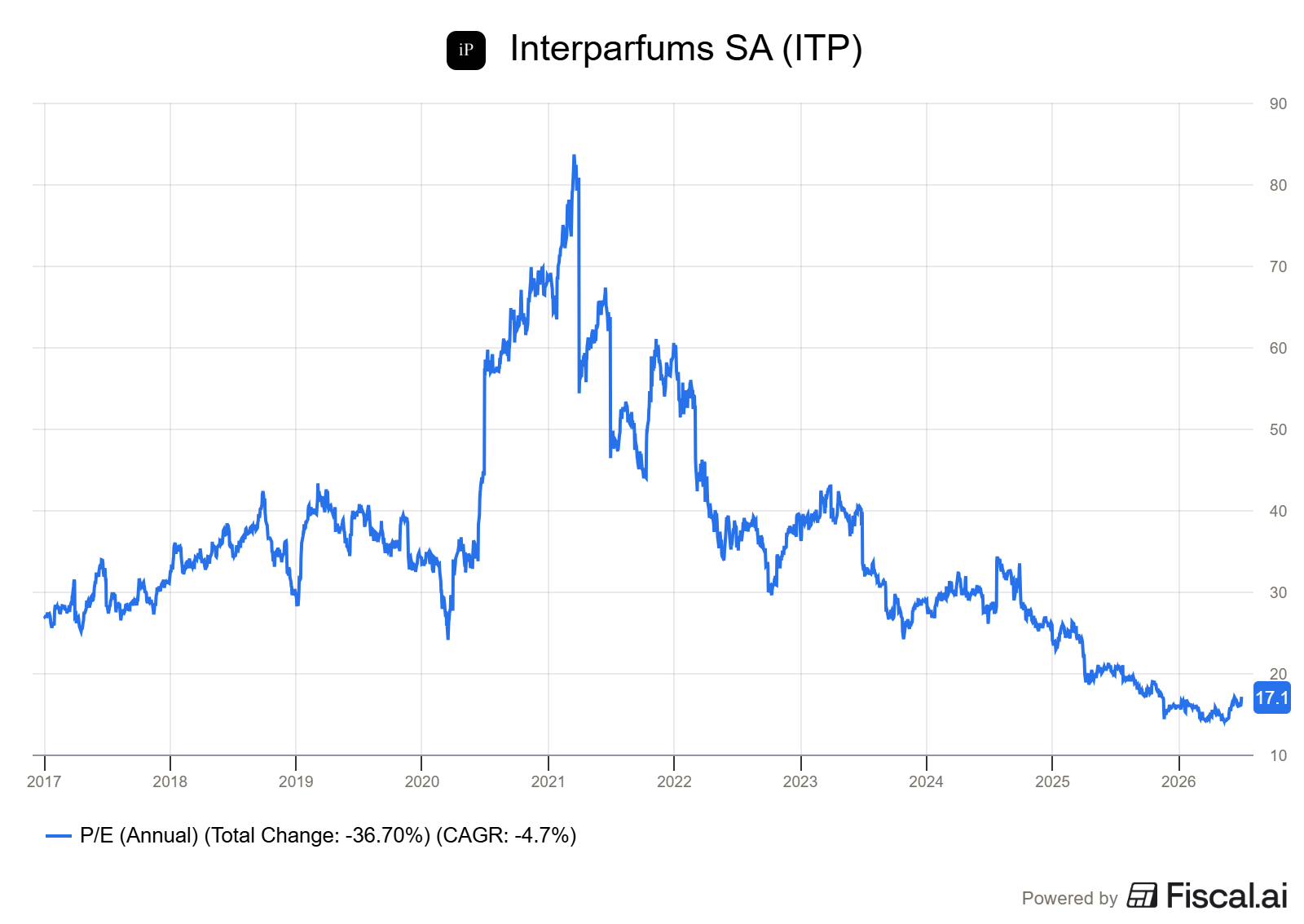
Interparfums is a forty-year-old licensing operator trading like its growth engine broke. It didn’t. A currency move and a tariff shock cost real money in 2025 and Q1 2026, and the stock repriced as if the damage were structural — PE compressed from a historical 30-40x range to roughly 15-16x on a normalized basis, the cheapest this business has traded in years.
Nothing in the numbers supports that read. Net cash, no leverage. A dividend maintained through the worst of the slowdown. Tariff-adjusted net income actually grew in 2025, once the one-off €7.6 million tariff cost is stripped out. The Boucheron license the market priced as lost in November 2025 was renewed in February 2026 — the clearest real-time test of the renewal track record this business has run for forty years, and it passed.
My conviction is the bull case: EPS compounding at roughly 14% a year as Lacoste matures and the 2027 brand launches (Off-White™, Annick Goutal, Longchamp) start contributing, with the multiple re-rating to 25x as the market re-reads this as a temporary air pocket rather than a structural decline. That scenario puts the stock near €58 within 2.5 years — +126% from current levels, a 38.4% CAGR. It doesn’t require heroic assumptions. It requires the licensing model to keep doing what it’s done for four decades, priced today as if it might stop.
This isn’t the loudest position in the portfolio. It’s a defensive business, temporarily priced like a declining one, sitting completely outside the AI narrative that moves everything else I hold. That’s the trade.
Understanding Interparfums’ business, supply chain and environment
History
Interparfums was founded in 1982 in Paris, by Philippe Benacin and Jean Madar. From the start, the structure was split in two: an American parent company, Interparfums Inc., listed on the Nasdaq in 1988, and a French subsidiary, Interparfums SA, listed in Paris starting in 1994. That dual listing is not a footnote — it gives the group two separate access points to capital markets and two distinct shareholder bases, an architecture it still carries today.
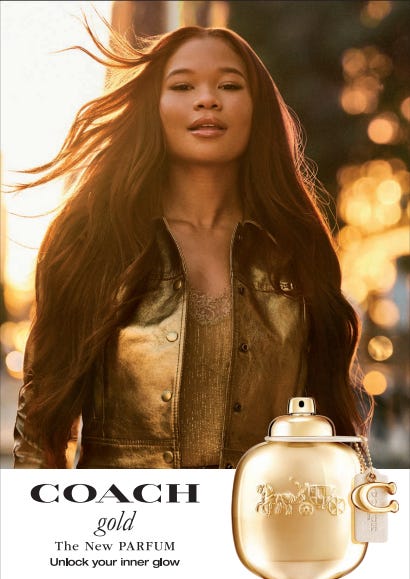
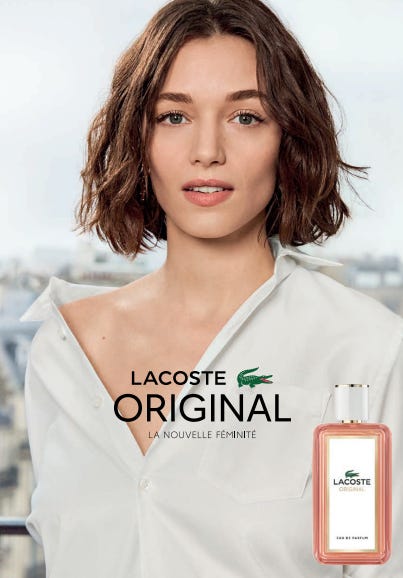
The core business has not changed in over forty years: sign licensing agreements with fashion, leather goods, or jewelry brands, and develop fragrances on their behalf. The first agreement, in 1988, was for the Régine’s brand. Others followed — Burberry (1993, terminated in 2012), S.T. Dupont, Paul Smith, Lanvin, Van Cleef & Arpels, Jimmy Choo (2009), Montblanc and Boucheron (2010), Balmain and Repetto (2011), Karl Lagerfeld (2012), Coach (2015), Kate Spade (2019), Moncler (2020), Lacoste (2022). Some licenses end — Burberry is the clearest example. Others last for decades and get renewed repeatedly, like Montblanc, extended through 2031.
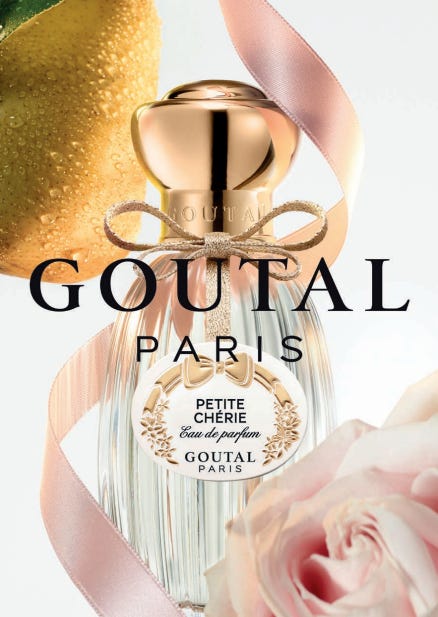
Two breaks from the pure-licensing model stand out. In 2015, Interparfums acquired the Rochas brand outright — its first owned brand. Then, starting in 2024, the group accelerated acquisitions: Off-White™ in 2024, Annick Goutal in 2025, alongside a new licensing agreement signed with Longchamp. The company is still, first and foremost, a licensing operator. But it is building, in parallel, a second pillar made of brands it actually owns.
Segments of activity
Interparfums runs one integrated business with two revenue mechanisms attached to it.
The licensing model is the historical core. A luxury house grants Interparfums the right to use its name in exchange for an annual royalty indexed on sales. Interparfums then owns the entire execution chain: fragrance creation, component sourcing, manufacturing, packaging, marketing tools, and distribution — all built in close collaboration with the licensor’s own creative and marketing teams. The relationship is long-term by design: brands are chosen for their international recognition and their “readable” identity, and each is developed through a steady cadence of launches meant to build a full product range over years, not quarters.
The owned-brand model applies to Rochas and to the fashion side of the business acquired more recently (Off-White™, and the newly launched Solférino Paris collection). Here the group runs a hybrid setup: part of the activity is sub-licensed to specialized partners who produce and distribute certain categories, while another part is operated directly by Interparfums, which then earns both the product margin and the royalty stream from its own sub-licensees.
Brand portfolio
The brand portfolio spans three tiers of maturity: long-established franchises with predictable renewal cycles (Montblanc, Jimmy Choo, Coach, Lacoste, Boucheron), the owned Rochas fragrance and fashion lines, and a newer growth layer built through recent acquisitions and licenses — Off-White™, Annick Goutal, Longchamp — whose first product launches are scheduled for 2027 and beyond. Management describes 2026 as a year of roughly fifteen line extensions on existing fragrances, alongside early development work on the newly acquired brands.
Clients
Interparfums does not sell directly to the end consumer. Distribution runs through wholly-owned or joint-venture subsidiaries, independent distribution companies, subsidiaries of large cosmetics groups, and duty-free operators, reaching close to 120 countries. International sales represented 93.6% of group revenue in 2025 — a figure that has stayed remarkably stable (between 93.6% and 94.6%) over the last five years. The United States is the single most important market and the most exposed to currency swings.
Suppliers
Interparfums owns no factories. Manufacturing is entirely outsourced to a network of roughly a hundred specialized industrial partners spanning several distinct trades: the “noses” and concentrate producers who create the fragrance oils themselves, glassmakers who produce the bottles, component manufacturers responsible for caps, pumps, and metal parts, box and packaging makers, and packaging and logistics providers based in France. The group describes this as a deliberate choice — flexibility over vertical integration — reinforced by a diversified network of production sites capable of making the same product, which limits the risk of a single subcontractor failure. Logistics is centralized through a dedicated 36,000 sqm warehouse in France, supplemented by warehouses in the United States and South Korea.
Interparfums spent close to €192 million on marketing and advertising in 2025 — more than 21% of revenue.
Competition
The prestige fragrance market breaks into two structurally different groups of players, and the annual report itself draws that line explicitly.
The integrated houses — LVMH (Christian Dior, Guerlain, Givenchy, Kenzo, Bulgari), Estée Lauder, Chanel, Puig — own the brands they sell fragrances under. They control the entire narrative: the runway shows, the boutiques, the advertising campaigns, the pricing architecture. Fragrance for them is one expression of a brand they already own outright, not a licensed activity.
The licensing operators — L’Oréal, Coty, Shiseido, Euroitalia, and Interparfums — do not own most of the brands on their shelves. They rent the name, execute the fragrance, and pay a royalty back to the house that owns the identity. Within this group, L’Oréal, Coty and Shiseido operate at a completely different scale, with fragrance divisions posting several billion euros in revenue each. Interparfums sits in the second tier alongside roughly ten other mid-size players, with revenue in the €100 million to €2 billion range.
That’s the direct competitive set. Indirectly, Interparfums also competes for licenses themselves — a fashion or jewelry house choosing between Interparfums, Coty, Euroitalia or an in-house fragrance division when a contract comes up for renewal or a new brand looks for a partner. Losing that competition doesn’t cost market share on a shelf. It costs the license outright, as happened with Burberry in 2012.
Category definers. Chanel and LVMH’s owned brands — Dior, Guerlain — are the closest thing this market has to category definers. They don’t need a licensing partner, they set the pricing ceiling, and much of what “prestige fragrance” means as a category is built on their positioning. No licensing operator, including Interparfums, occupies that role. The category is defined elsewhere, and Interparfums operates underneath it.
Market share. Interparfums holds around 4% of the French selective distribution market, and between 2% and 5% in other key countries — the United States, the United Kingdom, Mexico, China. In the US specifically, the report places Interparfums as the 7th-largest player, with a 4.5% share, and its three flagship brands (Jimmy Choo, Coach, Montblanc) sit among the top 30 fragrance franchises in the market. The global selective fragrance market is estimated at roughly $40 billion. On any of these numbers, Interparfums is a meaningful but clearly secondary player — never the largest, always present.
What the report is careful to point out is that the company doesn’t try to compete on the same terms as the leaders. The stated approach is explicit: a methodical, long-term development strategy, “not focused on volume and advertising, but rather on creation and consumer loyalty.” Whether that’s a genuine structural difference or a polite description of operating at a smaller scale is a question worth holding onto — it belongs in the competitive advantage section, not here.
Geographic revenue
North America alone accounted for €347.1 million of the €899.4 million in group revenue in 2025 — 38.6% of the total, and the only country the group is required to flag individually under IFRS 8, since the United States crosses the 10% threshold on its own. One US customer represented 12.6% of total group revenue in 2025. That’s a meaningful single point of dependency for a company whose whole model is built on distribution breadth.
The rest of the map: Western Europe €162.7 million, Asia €115.0 million, Eastern Europe €79.1 million, South America €78.7 million, France €57.9 million, Middle East €52.2 million, Africa €6.8 million. Asia actually declined year-over-year (from €125.2 million in 2024), a reversal that runs against the growth narrative used elsewhere in the report for the region.
The practical read: Interparfums is not a diversified basket of comparable-sized markets. It’s a US-led business with a long tail of smaller regions attached, and the dollar exposure that comes with it — the same currency dynamic management pointed to as the main drag on 2025 profitability.
Competitive advantage
Porter, Mauboussin, and most moat frameworks converge on the same question: why can’t a well-funded competitor simply replicate what this business does? For Interparfums, the honest answer starts with an admission — the most obvious asset in this business, the brand name on the bottle, isn’t one Interparfums owns or controls. That has to be dealt with directly before anything else.
What looks like a moat and isn’t one. A licensing contract is not a durable competitive advantage. It’s a lease. Burberry proves the point: thirteen years into the relationship, the license was terminated in 2012, and Interparfums lost the brand entirely — not gradually, just a contract that ended. Any investor tempted to treat the brand portfolio as a permanent asset base needs to hold that example in mind. The Maisons chose Interparfums once. They can choose someone else next time the contract comes up.
What might actually be durable. Three things, in order of how convincing they are.
Renewal behavior over four decades. Contracts ending is the exception, not the rule. Montblanc has just been extended to 2031. Boucheron to 2027. Coach’s latest renewal added five more years. Across roughly forty licensing relationships signed since 1988, the group has lost very few outright — Burberry is close to the only clean example in the report. That’s not proof of a moat, but it is evidence of a switching cost that runs in Interparfums’ favor: a Maison that terminates a working relationship has to rebuild an entire fragrance operation — creative process, manufacturing partners, global distribution — either in-house or with a competitor, and accept the multi-year gap in launches while that happens. Rebuilding is expensive and slow for the licensor, not just for Interparfums.
Contractual minimums that work both ways. In a standard licensing deal, Interparfums pays the Maison (Montblanc, Coach, and so on) a royalty calculated as a percentage of the sales Interparfums generates from that brand’s fragrances — more sales, more royalty owed to the Maison; fewer sales, less owed. On top of that, the group discloses €308.7 million in minimum guaranteed royalty commitments: fixed floor payments that Interparfums owes its licensors even if actual sales fall short. The direction of the money is always the same — from Interparfums to the Maison — the minimum guarantee just sets a floor under it.
That floor is a liability for Interparfums: a bad year on a given brand doesn’t reduce what’s owed. But it’s also worth reading the other way. A Maison agrees to a multi-year minimum-guarantee structure, instead of a simple percentage-of-sales royalty, because fragrance licensing is a narrow market with specific, hard-to-replace expertise — a handful of operators (Interparfums, Coty, L’Oréal, a few others) who can actually run the twelve-to-eighteen-month development cycle, the manufacturing network, and the global distribution. The Maison isn’t choosing from a deep bench of interchangeable vendors it can threaten to replace next quarter. Locking in a guaranteed minimum is what a licensor does when it has already accepted that switching partners would be slow and costly on its own side too — not just a gesture of trust, but a rational response to a market with few credible alternatives.
Operational depth that’s hard to buy quickly. Forty years of relationships with fragrance houses, glass manufacturers, and packaging suppliers; a twelve-to-eighteen-month development cycle run in close coordination with each Maison’s own creative team; a deliberately diversified production network so no single subcontractor failure can halt a launch. None of this is unique in the abstract — Coty and L’Oréal have the same kind of infrastructure, at greater scale. But it is genuinely difficult for a new entrant, or for a Maison trying to bring fragrance in-house, to replicate quickly. That barrier belongs to the handful of established licensing operators as a group, not to Interparfums specifically against Coty or L’Oréal.
The honest conclusion. This is not a moat in the strict sense — no network effect, nothing that gets structurally harder to dislodge as the company gets bigger. It’s a set of relationship-based, contractually-reinforced barriers that are real and have held up for decades, but that depend on Interparfums continuing to execute well for every Maison, every renewal cycle, indefinitely. The competitive position is defended continuously, not automatically. What should reassure an investor is not the existence of a moat — there isn’t one — but the track record of a company that keeps winning the renewal anyway, cycle after cycle, for forty years.
Financials
Key metrics
Comments
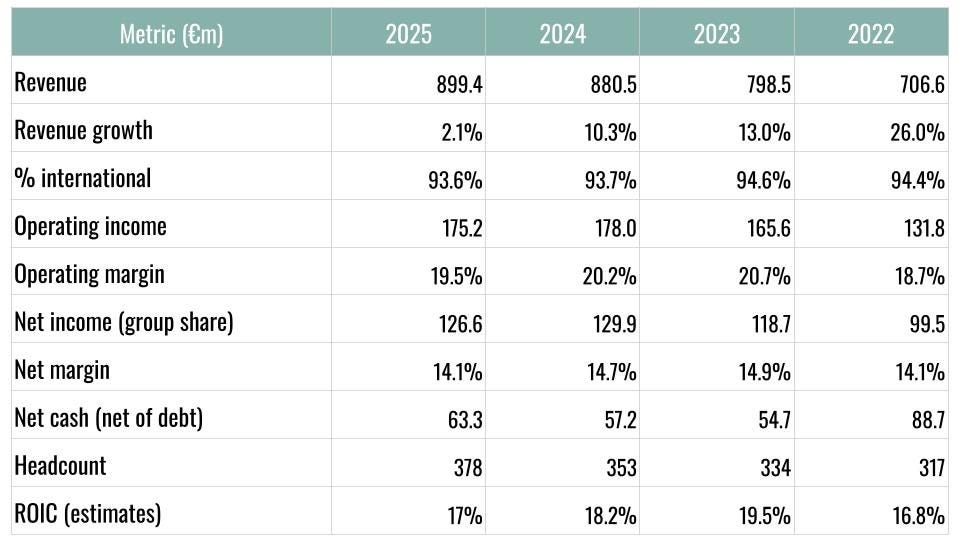
On revenue growth (2021-2025) — the deceleration is the single most important line in this table. Growth ran at 26%, 13%, and 10% in the three years through 2024, then dropped to 2.1% in 2025. Management attributes the slowdown to two external, largely non-repeating factors: an unfavorable EUR/USD move that cost roughly €20 million in sales, and a 15% US tariff introduced mid-2025 that forced pricing flexibility on the group’s largest market. The brand-level picture is more mixed than that framing suggests, though — Coach and Lacoste both grew in 2025, while Jimmy Choo and Montblanc, two of the three historical pillars, actually declined. Whether 2026 confirms this as a one-year currency-and-tariff air pocket or the start of a genuine deceleration is the question the valuation section has to answer.
On operating margin — the trend peaked in 2023 at 20.7% and has declined two years running, to 19.5% in 2025. That’s a smaller move than the revenue deceleration, but it’s moving in the same direction, and it should be watched rather than dismissed as noise.
On net income — the headline number looks like a decline: €129.9m to €126.6m, -2.5%. But that’s the unadjusted figure, and it’s misleading on its own. Interparfums discloses a tariff-adjusted net income of €132.3 million for 2025 — stripping out the one-off €7.6 million cost from the 2025 US tariff introduction — which comes in +2% versus 2024. Once that single external policy shock is removed, net income didn’t shrink in 2025. It grew, modestly, in line with a business absorbing a temporary cost rather than losing structural profitability.
On cash generation — operating cash flow rose from €107.7 million in 2024 to €150.0 million in 2025, even as reported IFRS net income dipped slightly. The driver is working capital: inventory swung from building up (-€19.3m in 2024) to being drawn down (+€23.3m in 2025). Cash conversion improved in the same year earnings stagnated — either disciplined inventory management going into a slower year, or a one-off destocking that won’t repeat. Capex roughly doubled to €40.5 million in 2025 (from ~€20.5m in 2024), which limits how much of that cash flow gain shows up as free cash flow, but estimated FCF still grew from roughly €87 million to €109 million.
On ROE — calculated directly from the reported figures, group-share ROE was approximately 17.3% in 2025 and 18.6% in 2024. Down slightly, consistent with the earnings deceleration already discussed, but still well above what’s typical for a consumer staples business of this size. Some third-party sources cite a higher range, closer to 19-21% — the figure used here comes from a direct calculation on the group’s own reported net income and equity.
On the balance sheet — net cash has grown every year except 2022, and stands at €63.3 million. There is no leverage overhang to monitor here, which matters when weighing this business against the two other positions in the portfolio that do carry meaningful debt structures.
Management
The founders are still in charge
Interparfums has had the same two people at the top since it was founded in 1982. Philippe Benacin and Jean Madar co-founded the company, and forty-plus years later they still control it — together holding 44% of Interparfums Inc., the Nasdaq-listed US parent, which in turn owns 72% of Interparfums SA, the Paris-listed operating entity. That’s not a symbolic stake. It’s a controlling one, structured through two layers, held by the same two founders since day one.
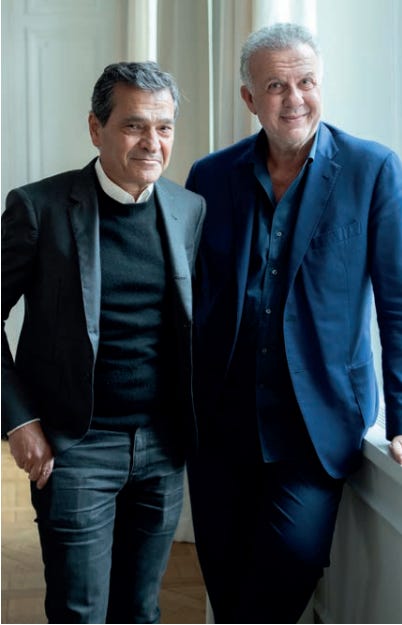
Benacin holds the Chairman-CEO role combined (Président-Directeur Général) — a concentration of power worth naming directly. In most governance frameworks that combination draws scrutiny, and it should here too: there is no independent chair providing a check on the CEO’s decisions. What offsets this to some extent is tenure and track record rather than structure — Benacin has run this exact business, with the same partner, through four decades of licensing cycles, without the kind of governance blow-up (auditor turnover, restated accounts, board revolt) that would normally accompany that level of concentrated control. Philippe Santi serves as Deputy CEO (Directeur Général Délégué), providing some operational counterweight day to day, but the ultimate authority sits with Benacin.
Skin in the game
A 44% combined stake in the parent company is about as direct an alignment as a shareholder can ask for — Benacin and Madar’s personal wealth moves with the stock, full stop. This is a materially different situation from a hired-in turnaround CEO with a few million euros of purchased shares. These are the two people who built the business, still holding the majority of the equity that controls it, forty years in.
Benacin’s annual variable pay is split 50% financial criteria and 50% extra-financial (qualitative and ESG) criteria — a heavier weighting toward non-financial metrics than is typical, and one investor focused purely on capital allocation might want to interrogate.
The succession
Succession planning is not addressed. For a business this dependent on long-standing personal relationships with luxury houses — built and maintained personally by Benacin and Madar over decades — the absence of a visible succession plan is a real gap, not a formality.
The two theses
Why the stock has fallen
The decline is not a single event. It’s a sequence of three, each compounding the last.
The first hit came on November 19, 2025, when Interparfums lowered its 2025 revenue guidance to €890 million and — breaking with its usual practice — declined to give any 2026 target, citing reduced visibility given the number of favorable and unfavorable variables in play. The stock fell more than 9% that morning. Analysts read the implied fourth-quarter figures as a mid-single-digit organic decline, and one research note flagged an unfavorable 2026 comparison base tied to the Boucheron license’s scheduled expiration at the end of 2025. The sector context made it worse: L’Oréal had already signaled that its own fragrance division growth had slowed sharply in the third quarter, and at least one broker described the broader prestige fragrance segment as losing momentum industry-wide.
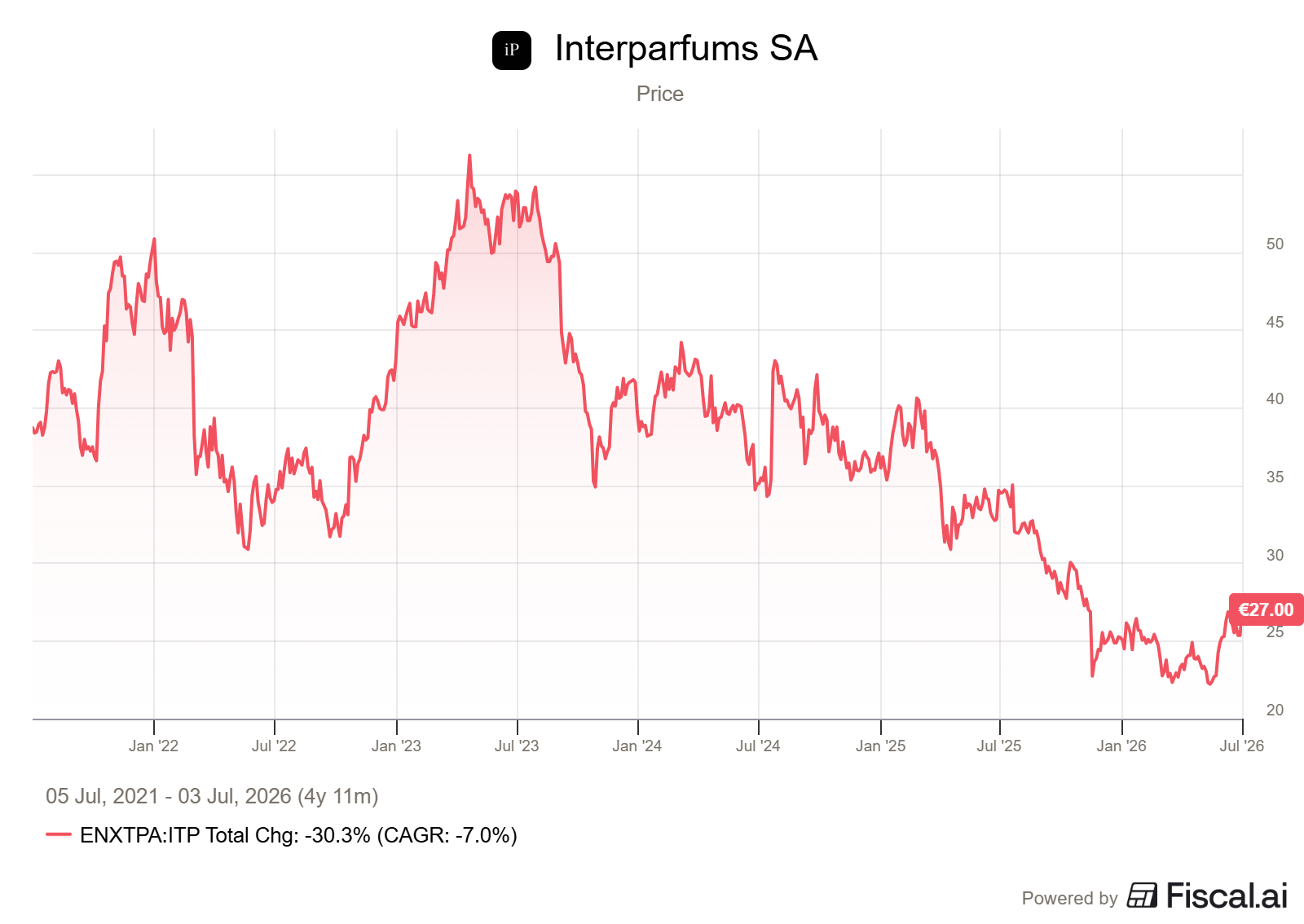
The second hit was slower and structural: a twelve-month slide that had, by early March 2026, taken the stock down roughly 40% year-over-year, trading near €24 and testing a key technical support level.
The third hit landed with Q1 2026 results on April 22: revenue of €215.5 million against €235.5 million a year earlier, an 8.5% decline, driven by unfavorable currency effects and geopolitical disruption in the Middle East. That report landed in the middle of a broader selloff across French luxury names — Kering and Hermès both dropped sharply the same month on sector-wide concerns.
The one piece of good news buried in this sequence is easy to miss if you only read the November headlines: the Boucheron license that analysts flagged as a comparison-base risk for 2026 was, in fact, extended — not lost. In February 2026, Boucheron and Interparfums agreed to prolong their partnership on the main existing lines through December 31, 2027. The market priced in a loss in November. The actual outcome, three months later, was a renewal. That gap between feared outcome and actual outcome is worth holding onto going into the bull case.
As of early July 2026, the stock trades around €25-26, within a 52-week range of €21.78 to €35.60 — down roughly 30% over twelve months. The PE has compressed to approximately 16-17x, against a historical range that has run 30-40x in normal years. The dividend yield sits around 4-4.5%, with a payout ratio near 70%.
Bear
The revenue deceleration is broader and deeper than management’s FX-and-tariffs framing suggests. 2025’s slowdown was explained as currency and tariffs. But Q1 2026 revenue fell 8.5%, and the explanation expanded to include Middle East geopolitical disruption — a third external factor layered onto the first two. At some point, a pattern of successive external explanations for successive quarters of decline starts to look less like bad luck and more like a business that has lost some pricing power or demand resilience it used to have. Operating margin has now declined for two consecutive years, from 20.7% in 2023 to 19.5% in 2025, and margin compression doesn’t automatically reverse when a currency does.
No structural protection, only behavioral evidence. Every brand in the portfolio is rented, not owned. Burberry is proof that a decades-long relationship can still end. The renewal track record is real — Boucheron’s extension confirms it again — but it’s a pattern, not a guarantee, and a pattern can break on any given renewal date.
Customer and geographic concentration are real risks. North America is 38.6% of group revenue. One single US customer accounts for 12.6% of total group revenue on its own. A distribution shift or a renegotiation with that customer would show up immediately and materially in the numbers.
The new brands are a cost today, a promise for tomorrow. Off-White™, Annick Goutal, and the Longchamp license don’t contribute meaningfully to revenue until 2027 at the earliest. They consume management attention and development capital while the base business is already decelerating.
A Maison could stop needing a licensee at all. The Burberry precedent already covers the risk of losing a license to a competitor. There’s a more severe version of that risk the bear case hasn’t named yet: a Maison deciding to bring fragrance production in-house entirely, exiting the licensing model rather than switching partners within it. This isn’t hypothetical — LVMH, Chanel, and Estée Lauder already run fragrance divisions internally, proving the model is viable at scale. If a house the size of Coach or Montblanc concluded it now had enough marketing and industrial infrastructure of its own to justify internalizing, Interparfums wouldn’t lose a renewal negotiation to a rival licensor. It would lose the category permanently, with no contract left to compete for next cycle.
Governance concentration compounds all of the above. A combined Chairman-CEO role, held by the same person for over forty years, with no visible succession plan and licensor relationships that are, by the report’s own emphasis, personally built.
If the bear case is fully right: margin keeps drifting down through 2026-2027, external headwinds prove sticky rather than transitory, and the market settles on a lower structural growth rate for the whole licensing model — not a collapse, but a re-rating from “quality compounder” to “mature operator in slow decline,” with the PE multiple staying compressed near current levels rather than reverting toward its historical range.
Bull
The market has already priced in the worst version of this story, and the worst version keeps not happening. November 2025 priced in a lost Boucheron license. Boucheron was renewed in February. The PE has compressed from a historical 30-40x range to roughly 16-17x (unadjusted) — a compression larger than the actual deterioration in the fundamentals justifies, given that revenue is still growing, tariff-adjusted net income actually grew 2% in a year with two simultaneous external shocks, and operating cash flow improved sharply.
Forty years of renewal behavior, tested again in real time. Montblanc extended to 2031. Boucheron just extended to 2027, after the market had priced its loss. Coach added five more years. That consistency, sustained through the exact kind of pressure the market is currently pricing as terminal, is the strongest evidence available that the licensing relationships are more durable than a rented-brand framework implies.
The balance sheet gives this business time the market isn’t pricing. Net cash of €63.3 million, zero structural leverage, a dividend maintained through the slowdown, and a share buyback program approved at the April 2026 shareholder meeting — none of this is the profile of a business under financial stress. It’s the profile of a business absorbing a demand-side air pocket from a position of strength.
The next growth layer hasn’t started yet. Lacoste is still ramping. Off-White™, Annick Goutal, and Longchamp don’t show up in the numbers until 2027. A market pricing the stock on trailing growth is, by definition, not pricing what happens when that layer starts contributing.
What would need to be true for this to work: the Middle East and FX headwinds normalize rather than persist, the Boucheron pattern — feared loss, actual renewal — holds for the next major license coming up for renewal, and the 2027 brand launches deliver enough incremental revenue to restore double-digit growth. None of these are heroic assumptions. They’re a continuation of what this business has done for forty years, priced today as if it might stop.
Blind spots
Q1 2026’s 8.5% revenue decline is one data point, not a trend line. Whether it stabilizes, worsens, or reverses in H1 2026 will only be visible once that report is published. Everything in the bear and bull cases about the trajectory of the current slowdown is, for now, an extrapolation from a single quarter.
Succession planning is absent, even though the founders’ age makes it a near-term question, not a distant one. Benacin (67) and Madar (65) have run Interparfums together since 1982. No succession plan is disclosed. It will certainly be someone currently in the organization.
Valuation
The metric
TTM EPS based on IFRS net income, with one adjustment I’m making explicit rather than silently baking in: 2025 group net income of €126.6 million already absorbs a one-off €7.6 million cost from the 2025 US tariff introduction. Management’s own disclosure isolates this, giving a tariff-adjusted net income of €132.3 million (+2% versus 2024) — a genuinely comparable, recurring-basis figure rather than a number distorted by a single external policy shock. I’m using that adjusted figure as the base for the scorecard below, on roughly 80 million shares outstanding, for an adjusted EPS TTM of approximately €1.65. The unadjusted IFRS EPS, for reference, is closer to €1.58.
At a current price of roughly €25.50, the adjusted PE TTM stands at approximately 15.5x — against a historical range that ran 30-40x in normal years, and the lowest level the stock has traded at in years.
The scorecard
The table below uses adjusted EPS TTM of €1.65, a 2.5-year horizon to 2028, and three growth scenarios. Bear case assumes 3% annual EPS growth — consistent with the current slowdown persisting largely unresolved. Central case assumes 8%, roughly in line with what the licensing model has delivered across past cycles once currency and tariff effects normalize. Bull case assumes 14%, reflecting a return to something closer to the growth this business posted before 2025. Combinations that are internally contradictory — a bear earnings trajectory paired with a bull-level multiple, or vice versa — are marked Irrelevant.
One important caveat: all figures in the scorecard are pre-tax and pre-fees. The actual return in your hands will depend on your tax situation, the investment vehicle you use and any transaction costs. Run the numbers for your own situation before drawing conclusions.
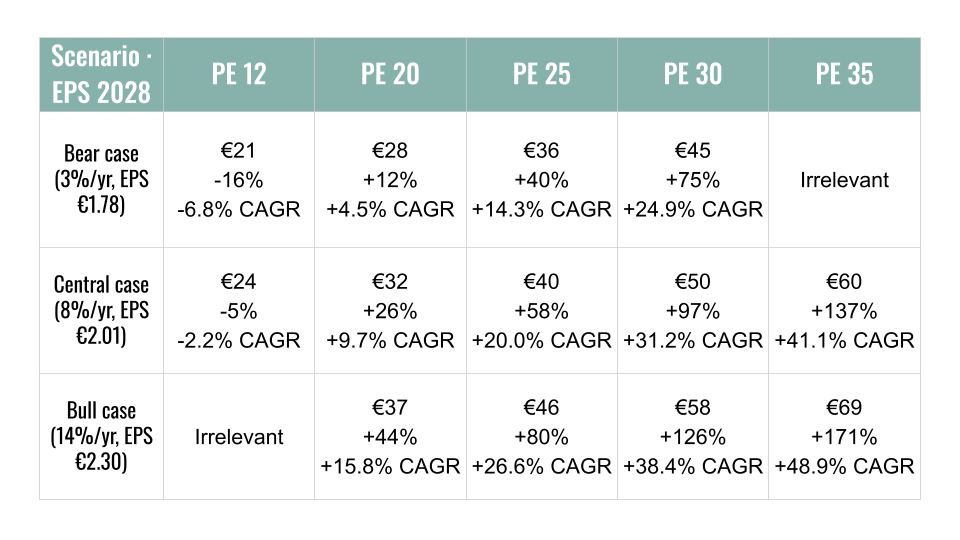
How to read this. The only scenarios producing a loss combine PE 12x with either bear-case or central-case earnings — a multiple below where the stock trades even today, applied to a growth rate that’s already the pessimistic case. That’s a narrow downside window, not a broad one.
The central case at PE 20x — €40, +58%, +20.0% CAGR — requires no heroic assumption. It prices the business at barely above two-thirds of its own historical multiple, with EPS growth roughly in line with what this licensing model has delivered across past cycles. That’s what a partial re-rating looks like when a sentiment-driven discount unwinds without needing the bull case to be right.
My conviction is the Bull case with a 25-30 PE ratio, happening in less than 2,5 years.
The asymmetry
At today’s 15.5x, the market is pricing something close to the bear case already. Getting back to even a partial re-rating — not the historical 30-40x premium, just a multiple more consistent with a stable licensing operator putting a rough year behind it — produces a return profile that doesn’t require the bull case to be right, only for the current slowdown not to be permanent.
Portfolio considerations
Sizing
The safer the profile, the more room it can occupy in the portfolio
On my portfolio, it is a defensive stock with great repricing opportunities so I could allow a significant portion of my portfolio, up to 15% in the initial position. But I’m lacking of cash, and i’m confortable with my actual quality positions (booking, novo, adobe, etc.). I don’t want to reallocate massive chunks of my multibagger stocks (Nebius, Atos, Strategy) as they will provide most of my returns. So I will trim Nebius as soon as the stock goes back to its ATH, around 10%. I’m not comfortable with the current Nebius price, down because of fears of the meta competition.
Correlation
As said in the introduction, what I like in this stock is the decorrelation to the AI narrative. No bottleneck, no risk of circular funding. You can sleep on it for 2 years, just waiting for the catalysts to happen. Interparfums is a great stock in case of tension with the tech narrative: as offensive stocks will be beaten by the market, I can reallocate with a potential revaluation.
Conclusion
Interparfums is not a hard business to understand. Sign a license, make a fragrance, sell it in 120 countries, collect a royalty or a margin. Forty years of doing exactly that, without a scandal, without a debt crisis, without a governance blowup.
2025 and Q1 2026 made it look harder than it is. A currency move, a tariff, a guidance cut that broke with the company’s own habit of quiet reliability. The market did what markets do with a broken habit — it repriced the stock as if the habit itself was gone, not just interrupted. The PE compressed from a historical 30-40x range to roughly 15-16x on a normalized basis. That’s not a mild discount. That’s a business priced as if the growth engine were structurally damaged.
Nothing in the numbers supports that read. Net cash. A dividend held through the worst of it. A tariff-adjusted net income that actually grew in 2025, once the one-off is stripped out. A Boucheron license the market priced as lost in November, renewed in February. Two of the three historical brand pillars declined this year, but the newer ones — Coach, Lacoste — picked up the slack, which is closer to a portfolio rotating than a portfolio failing.
The real risk isn’t a moat question — there isn’t one, and there never was. It’s a renewal question, license by license, forever. Forty years of renewals is not a guarantee. It’s a track record. The bear case only wins if that track record breaks, and nothing in this report says it has.
What this position offers isn’t the asymmetry of a turnaround or the disruption-fear unwind of a mispriced platform. It’s something plainer: a defensive business, temporarily priced like a declining one, sitting completely outside the narrative that moves the rest of this portfolio. That’s not the loudest reason to own something. It might be the most useful one.
Image credits
Product and marketing visuals sourced from the investor relations section of Interparfums. Financial charts sourced from Fiscal.ai.
Important Disclosure & Disclaimer
All content published by JB Peter on this platform is strictly for educational and informational purposes. It does not constitute investment, financial, legal, or tax advice, nor does it represent a personal recommendation or solicitation to buy or sell securities. This research is operated by ORIACON (SASU) and reflects independent corporate analysis. Every reader must conduct their own independent research (Due Diligence) or consult a licensed professional before making any financial decision, as financial markets involve a high risk of capital loss. At the time of writing, ORIACON or the author HOLD shares in the company analyzed in this article. Following this publication, ORIACON and the author reserve the right to buy, sell, or modify positions in any security mentioned at any time, without prior notice to readers or subscribers.