
Introduction
“The streaming market is saturated”
“Netflix has gotten too expensive”
“There’s no more growth”
These points may be true, to a certain extent. But the market consensus loves to reiterate its pessimism when the price is at its lowest, while every new rally is met with optimism when the price hits record highs.
Netflix had been riding a wave of excessive optimism, which was reversed by a drop of more than 40% from its highs. But like all great companies, it never ceases to surprise us. Let’s see what the future holds for Netflix.
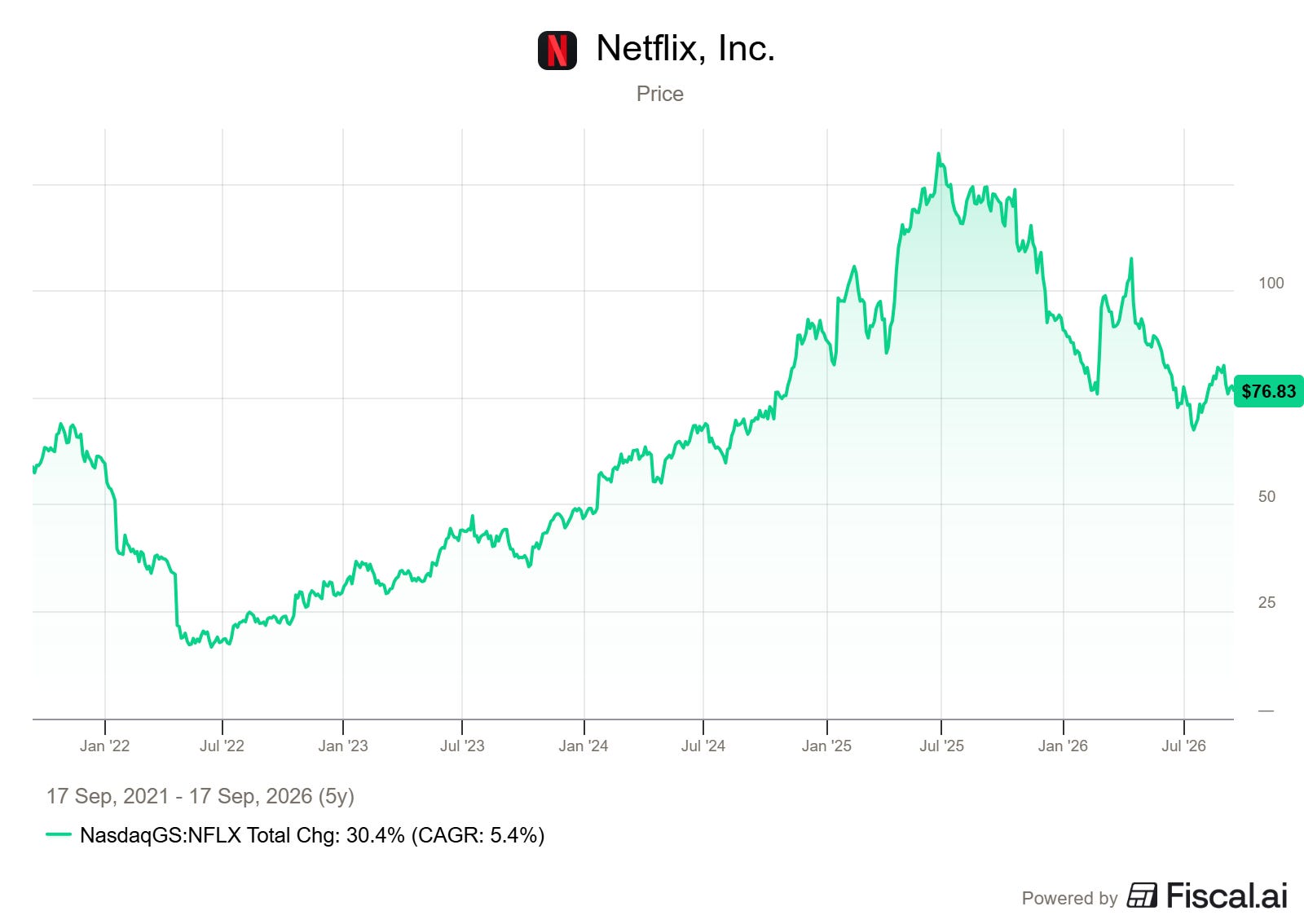
Like AppLovin, Netflix belongs to my favorite type of investment: a category definer, temporarily beaten down by the market on a below-expectations print.
A category definer is a company that created a new category and occupies the leadership seat in it, crushing the competition in its segment through its products and services.
This is a favorite strategy of Bill Ackman at Pershing Square, where he made a purchase in Q2 2026 for a position that now accounts for nearly 5% of his portfolio, with an entry price of $71.

I had already noticed Netflix when its stock price fell in Q2, but it was hard to know how far the price would drop. It seems to have stabilized since then.
The structure of my deep dive is standard. Learn the process in the dedicated articles in the learning section.
The whole article is long because it covers a lot of ground, and short because I try to give you a synthesis of the points. So I start with a “short version” for those of you in a hurry.
The Short Version
Netflix is a category definer down 40% after several quarters that pointed to a slowdown in growth. The streaming giant serves 330 million households, yet still holds only 7% of a $670 billion market. The company has a competitive advantage due to its size, which gives it a cost advantage in production and distribution, and due to its proprietary catalog. But the following question is, in my opinion, the key reason for choosing Netflix as an investment:
If you had to keep just one streaming service, which one would you choose?
Everyone I spoke with chose Netflix. The double-digit annual revenue growth over the past several years has resulted in earnings growth of more than 30% per year. The steady increase in revenue continues to improve operating leverage and, consequently, profitability potential. The company has growth drivers in advertising, video games, and live events, particularly in sports.
I’m convinced that Netflix could quickly double in value within a year, or grow by 30% annually for about three years. The Q3 results on October 20 will indicate whether I should buy the stock; I’ll keep an eye on whether the price stabilizes or if market concerns persist.
1. What Netflix does
History
Netflix was founded in 1997 by Reed Hastings and Marc Randolph in Scotts Valley, near Santa Cruz, California. It began as a mail-order DVD rental service. The company went public in 2002. Reed Hastings took sole control in 2004 and launched its streaming service in 2007, which would go on to bring the company spectacular success. It began producing original content with *House of Cards* in 2013, marking a turning point in its history.
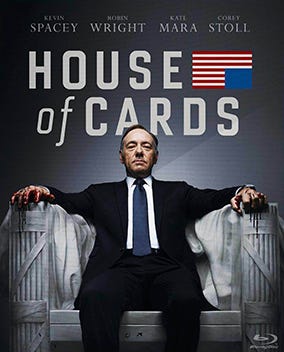
The first season of *House of Cards*, a Netflix original series, marks a turning point in its story
The 2010s were a period of growth and international expansion. The company experienced its first-ever net subscriber loss in Q1 2022, which, combined with the ongoing bear market, led to a nearly 75% decline in its stock price. Starting in 2023, the company launched its ad-supported service.
What it sells
Netflix primarily sells subscriptions directly to viewers. It’s also possible to get Netflix through partners or service providers. Subscriptions are monthly and can be canceled at any time, with prices ranging from $1 to $37 per month depending on the country and the plan (ad-supported or ad-free, number of screens, video quality, etc.). The company reserves the right to change its prices and plans “based on perceived value rather than on a fixed schedule.” A small portion of its revenue comes from advertising.
Companies typically report on multiple product lines. Netflix, however, reports under a single operating segment: “Streaming Revenues.” The 2026 guidance is $51 billion, of which $3 billion comes from advertising, with the remainder coming from subscription revenue. Netflix is best known for its catalog of movies and TV shows, but other segments are expanding, including video games and podcasts. As management noted during the Q2 2026 earnings call:
Another big positive sign is that since last October, so 8 months ago, when we really sort of scaled up this cloud initiative, monthly active players for cloud games have increased 11x and adoption is significantly ahead of that curve that we had for mobile games with even higher retention value. So we’re definitely excited about that and focused on scaling up cloud games. We’re also seeing positive signals with kids games. So Netflix Playground, which is our app for kids games, no ads, no in-app purchases, curated set of games, very safe space. We’ve seen 3x growth in daily players since that launch. That’s driven more engagement in kids mobile games, which is up 600% year-over-year. So that’s super exciting to see as well.
Gregory K. Peters, Co-CEO, President & Director
Management also cites podcast distribution as showing encouraging signs. It remains to be seen whether this segment will develop into a growth driver in the future.
Netflix is also developing an offer on live events, as they “do a lot of lifting for us for acquisition: [...] 6 out of top 10 new member sign-up days over the past 5 years have come from live events”.
The company spends between $18 and $20 billion a year on content.
Customers
Typically, understanding a company’s customers (especially in the B2B sector) is particularly complex. In this case, Netflix has the undeniable advantage of catering to the general public and applying Peter Lynch’s key principle: “Invest in what you know.”
Its 330 million subscriber households, which initially were more prevalent among those under 45, now span all ages and family types, ranging from those who are more price-sensitive and opt for the ad-supported tier to those seeking a premium experience who are willing to pay more.
Here’s a little anecdote: I know quite a few families where the grown-up kids come back to visit their parents to get their Netflix account back, since access gets blocked after about two weeks without a Wi-Fi connection. It’s a sign of family bonds, and it’s touching.
Below is a geographic breakdown of revenue. This overview shows a disproportionate concentration in countries where subscriptions are most expensive.
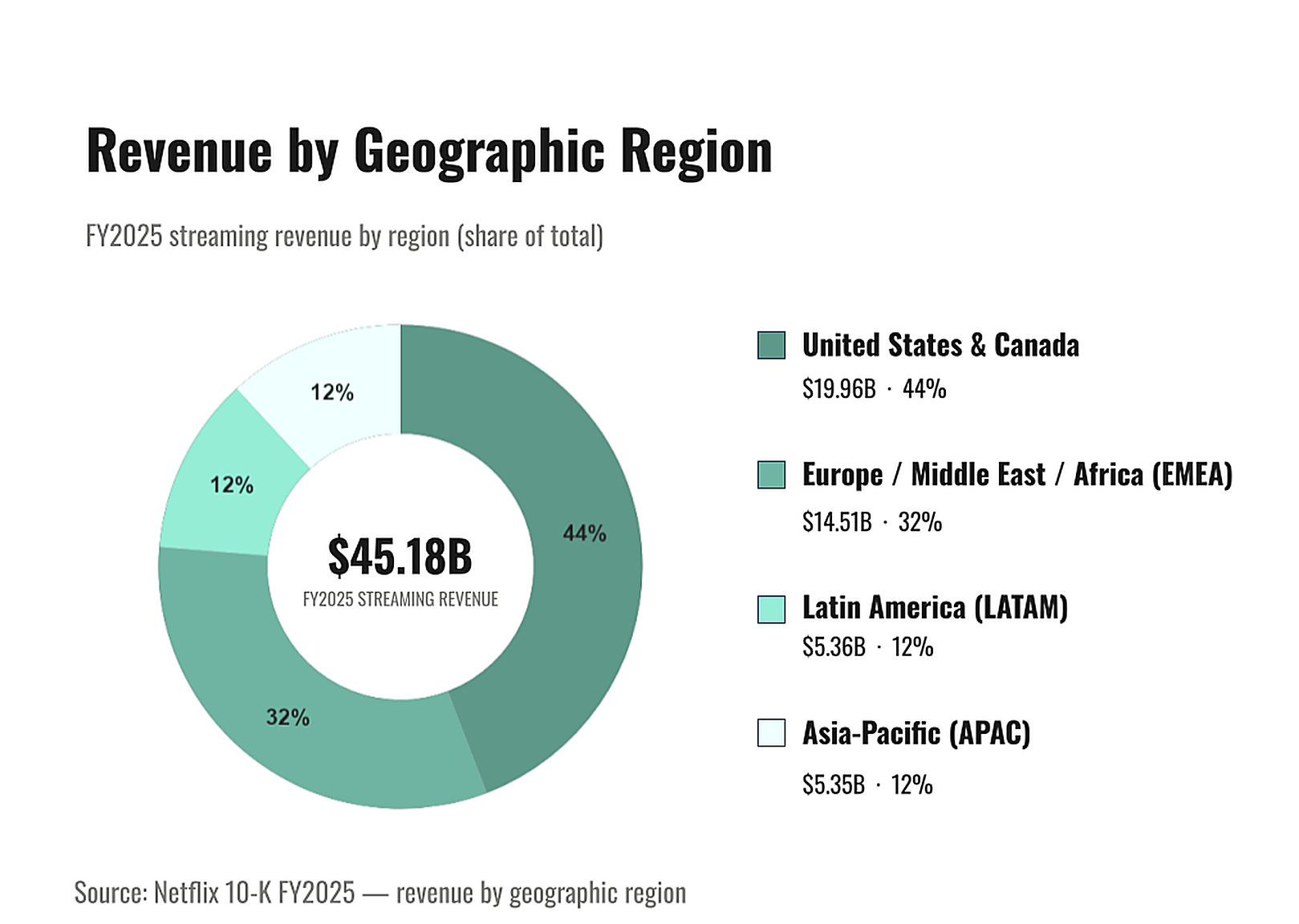
One type of minority client is advertisers in the advertising sector.
According to Netflix, its Total Addressable Market (TAM) is estimated at $670 billion, and the company captures 7% of it, which represents 5% of the global TV audience share. This second metric measures time spent, while the first focuses on revenue.
Netflix still has enormous room for growth in its core segment, as the company states they serve 330 million households out of 800 million.
The market itself is growing, according to the company, from $600B+ in 2023 to $670B in 2026, but Netflix does not publish market share figures before 2024: the first historical figure is 6%, rising to 7% in 2026.
Regarding the video game segment, the company indicates a TAM of $140-150B excluding China/Russia, with revenue still nascent for now.
Suppliers
Netflix runs the vast majority of its computing on Amazon Web Services. Quite funny when you know it’s its closest competitor.
The Hollywood guilds govern collective bargaining agreements for writers, actors, performers, and directors. Contract renegotiations are potential moments of risk.
The company also purchases content rights, and has studios and rights holders as suppliers for its content licenses.
Netflix operates its own delivery network, and must interconnect with internet service providers and other telecom operators. This regularly leads to disputes and court summonses over net neutrality and fee calculations.
Competitors
The first area to consider is direct competition. The graph below shows major players’ market shares:
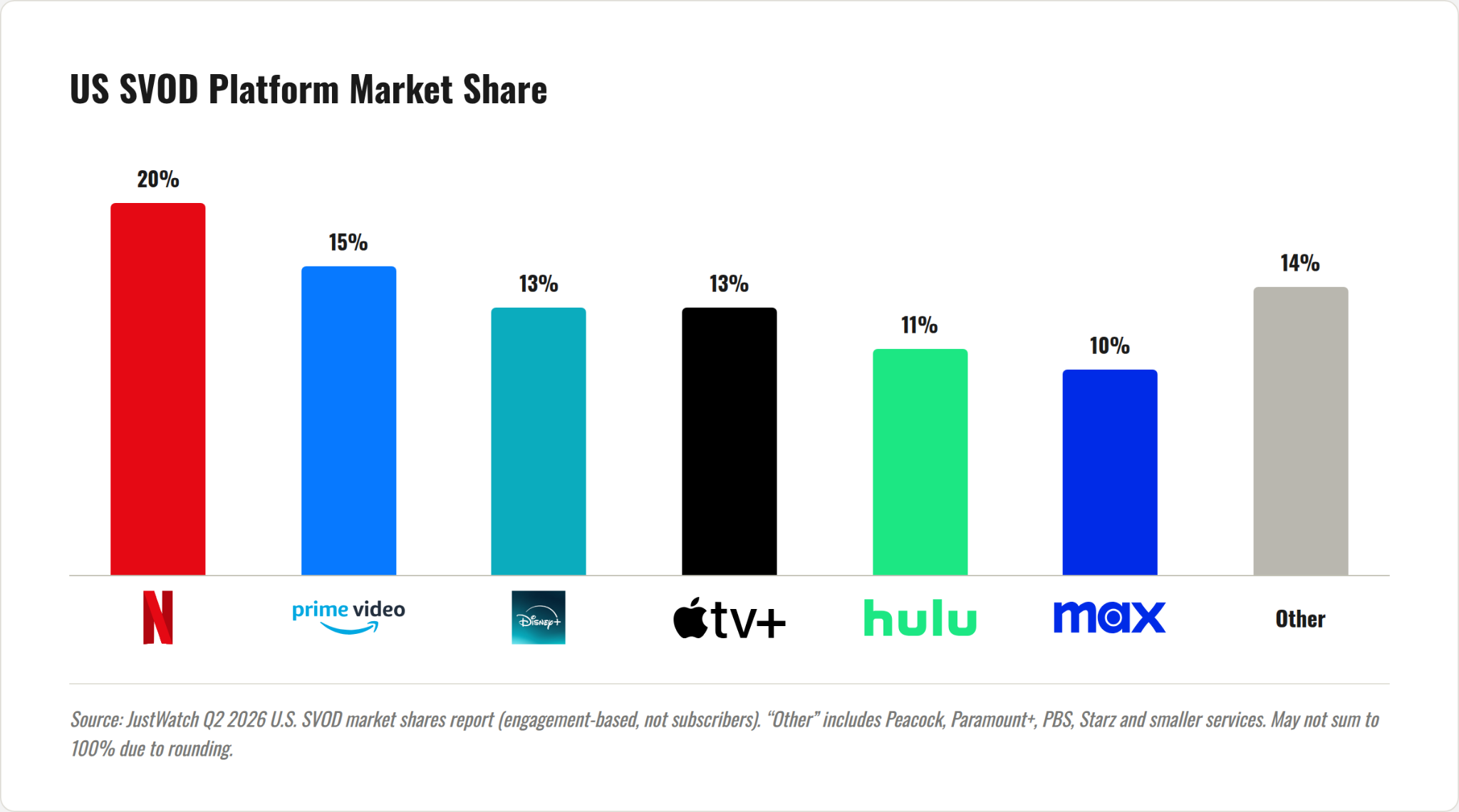
2025/2026 was in this sector a true stock market soap opera, full of rumors and dramatic twists: The industry was in negotiations to acquire Warner Bros. Discovery’s streaming and studio businesses, with Netflix having made an offer, then withdrawing in the face of a higher bid from Paramount-Skydance.
Every time a user wants to be entertained, they will choose their medium, and the real battle is for the user’s attention. That is why, in its talks, management prefers to talk about another metric called moment of truth, rather than viewing time. It describes the instant when the consumer chooses a brand or product over an alternative.
If the moment of truth is the battle for attention, the war is fought in the mind.
And in this arena, the competition is fierce: YouTube and its billions of videos, Meta and its endless feed, television, video games, and every form of entertainment under the sun. For example, YouTube accounts for 13.4% of U.S. TV viewing time, compared to 7.8% for Netflix.
A French television executive (TF1) made an infamous remark when he said he was selling “available brain time.” Behind this cynicism lies an incentive for an ad-supported network to maximize captive brain time at all costs (through addictive, superficial, and repetitive content) because that’s what sells to advertisers. Netflix, being subscription-based, is incentivized to maximize perceived value (and as metrics, quality and retention) so that the subscriber keeps paying every month.
Competitive advantage
From a consumer’s perspective, I invite you to ask the people around you: If you had to keep just one streaming service, which one would you choose?
I may be biased, but as far as I’m concerned, the unanimous answer is Netflix. Even for those with children, where you might expect competition from Disney+.
It is my deep conviction and it resonates whenever I hear that Netflix has won the streaming war, beyond just market share.
On subscription pricing:
The US/Mexico/Spain price increases in H1 2026 were absorbed as expected
The end of password sharing had already converted free users into paying ones.
We can infer that a price increase in Europe would have the same effects.
A major point: users can cancel their subscriptions at any time. The switching costs are mainly psychological, but subscribers could potentially leave overnight. The assumption made above is that a multi-streaming user would cancel their subscription to another service in order to keep only one: Netflix.
The company also has an advantage of better use of catalog and greater predictability of success on pre-project (i.e. when you choose which shows you’ll produce) that comes primarily from behavioral data collected over more than a decade and engagement metrics that Netflix refuses to disclose:
“It has taken us years to develop, vet, assess, and improve it, and we believe those details are a competitive advantage.“
Greg Peters, co-CEO
Netflix produces most of its shows. It carries some advantages like the IP Ownership: In 2019–2021, WarnerMedia/NBCUniversal removed Friends and The Office from its catalog. When you have the ownership, you cannot be canceled. It also gives the ability to monetize the content, like with games, merchandise or spin-offs.
It also eliminates the middlemen, for a better cost basis of the content, and when Netflix produces real hits, it can distribute them across 330 million subscribers in ~190 countries. It is something a traditional studio cannot replicate.
Netflix has the largest engaged audience in the world: it gives the company a decisive cost advantage from economies of scale. In addition to this advantage, there is a network effect that attracts creators and studios, because the return on investment for content distributed at this scale is better than elsewhere. That improves Netflix’s bargaining power in future deals. And because it has such a scale, it was able to develop a proprietary delivery network (OpenConnect), with a cost advantage over a third party.
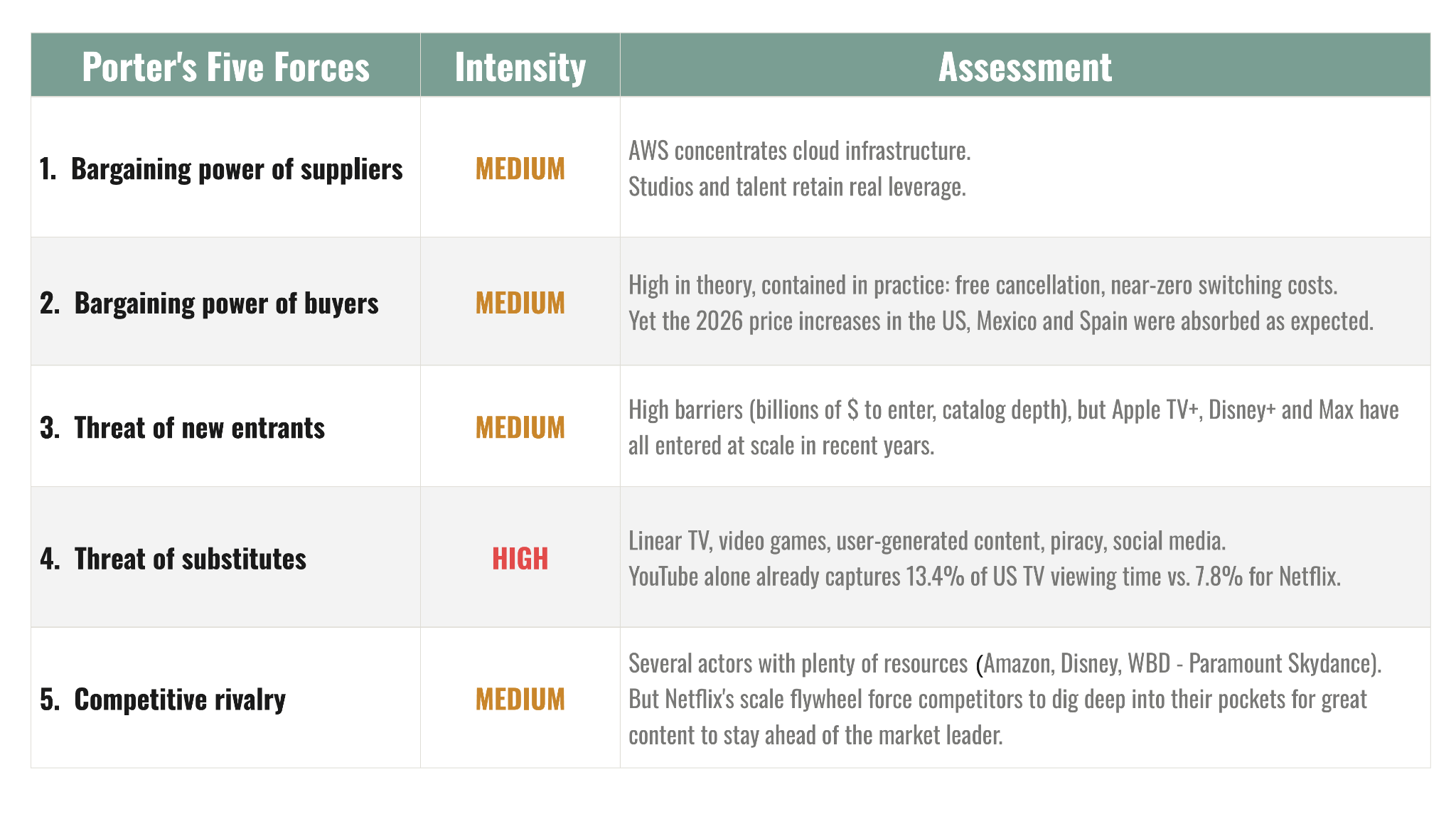
Here is the summary slide. Note that this image should be read against the alternatives. Netflix will face less competitive intensity than Hulu, because this is David against Goliath, so Netflix has an advantage over its competitors. It is not Apple, nor Coca-Cola, in terms of competitive advantage, but it is still a very good moat.
2. Financials
Key financial metrics
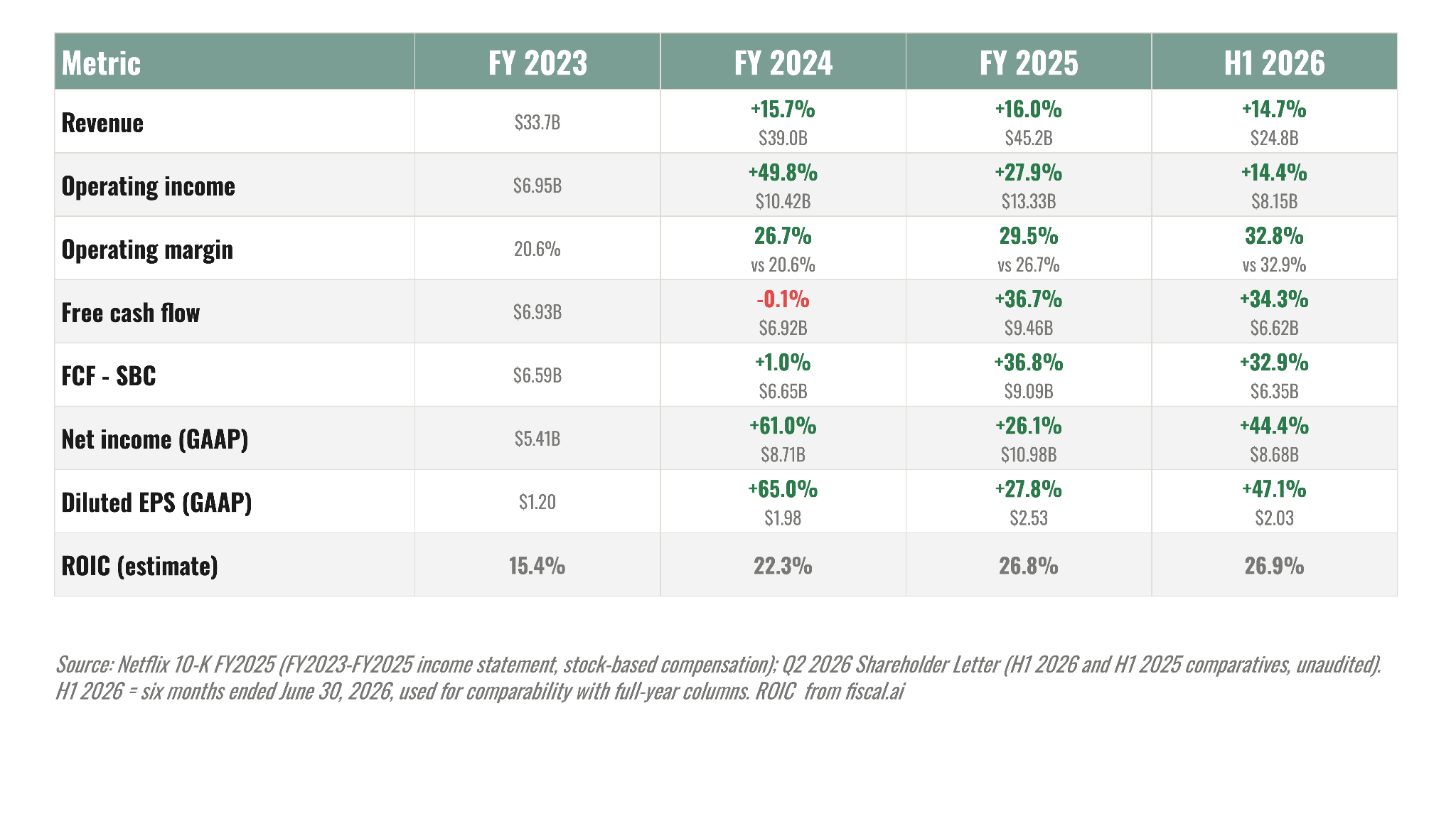
Watch out when interpreting the figures; these are for a half-year period in 2026. You must double the amounts and adjust for one-time items to compare the years.
Commentary
Revenue
The increase in revenue is generally linear. Note that the deferred revenue mechanism (subscription fees billed in advance but only recognized in earnings for the delivered part) can affect sales. The increase is due either to the growing number of subscribers or to pricing.
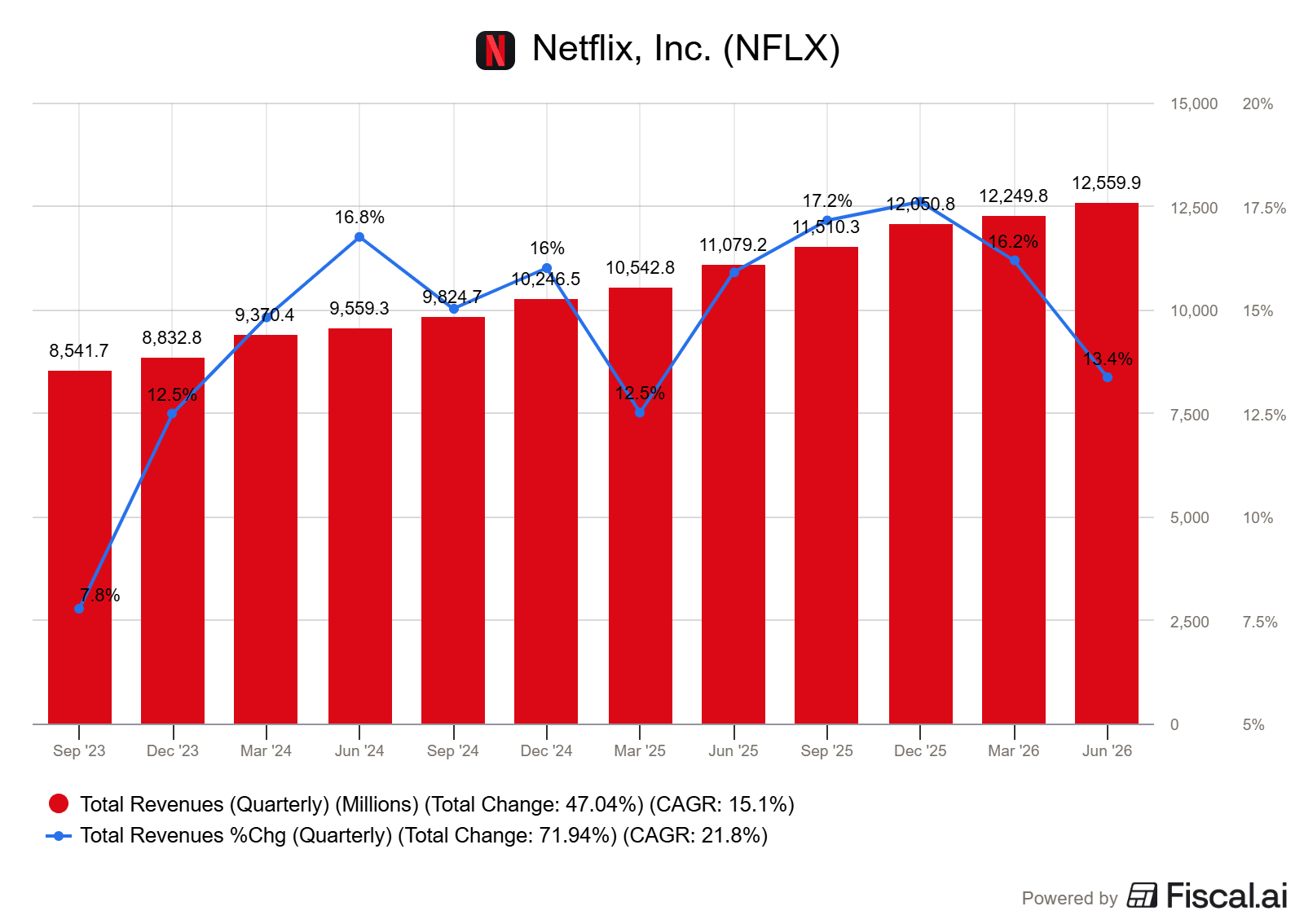
It’s worth noting that Netflix has immense growth potential in its core market. A shift from 7% to 14% of the company’s total addressable market (TAM), based solely on volume, would double annual revenue and generate between 100% and 200% profit growth, depending on assumptions regarding operating leverage.
Operating margin
Every increase in revenue leads to an increase in operating leverage, which in turn leads to higher margins.
Without going into too much detail, the company will record its content on its balance sheet (capitalize it) at the outset, and then amortize it over time. More than 90% of the cost of a title (license or production) is amortized within four years of its initial release, with movies amortized more quickly than TV series. Netflix does not amortize titles individually, but rather on an aggregate basis.
Production tax credits reduce the cost basis of the content, thereby reducing future depreciation over the title’s useful life.
The value of the catalog and intellectual property does not appear on the balance sheet; it is a cost that is amortized. This intellectual property can therefore be considered an unrecognized asset.
Net income and free cash flow
Net income for H1 26 must be restated because it includes $2.8 billion in termination fees related to the WBD contract negotiations, which are reported under “Interest and other income.” This accounts for almost the entire difference from FCF.
Differences in the amounts capitalized and amortized can account for discrepancies between net income and free cash flow:
If Netflix capitalizes more than it amortizes, there is no impact on net income, but free cash flow decreases (because operating cash flow decreases).
If Netflix amortizes more than it capitalizes, this reduces net income but has no effect on free cash flow, since the cash was already spent at the time of capitalization.
It’s kind of like working capital.
The annual growth in net income and free cash flow over the past five years has been impressive, especially given the company’s market capitalization, at approximately +31.8% per year and +37.4% per year, respectively.
Balance sheet
The balance sheet is dominated by content, with net content assets accounting for 59% of it. Netflix has $9 billion in cash and net debt (including cash on hand) of $5.24 billion. It would take the company nearly five months of operating income to pay off its debt. No problem there.
Netflix also has off-balance-sheet commitments related to contractual obligations: these are productions that Netflix has agreed to produce but that are not yet available in its catalog. The total amount is nearly $18 billion, after all.
3. Management
A Two-Headed Head
Historically, Reed Hastings was at the helm, but since 2020, the company has had two CEOs. Normally, this violates the principle of unity of command so dear to Fayol, which is why this model remains very rare.
Here, responsibilities are divided by area:
Ted Sarandos: content, marketing, legal, communications, public relations. He has held this position since July 2020 and has been with Netflix since 2000.
Greg Peters: Product and Technology, Advertising, Human Resources, Finance, Video Games. He has held this position since 2023, taking over from Reed Hastings. He joined Netflix in 2008.
The principle is specific to Netflix: for each significant decision, a single person is designated as responsible (the “captain”), chosen based on who has the most expertise and context on the subject. It is up to that person to consult widely before deciding, but the final decision rests with them, with no need for consensus. They call it “informed captaincy”.
When there is a disagreement between the two, Peters summed it up this way: “When there’s a space where we disagree, but then we ultimately defer to each other’s area of expertise, I think we get to better decision-making.”
A safety net exists as well: the two work with an executive coach (whose identity remains confidential at Netflix) to manage their relationship and coordinate with the board of directors, described as a “light touch” intervention.

Ted Sarandos and Greg Peters
Regarding their alignment (skin in the game),
Ted Sarandos earned a total of $53.9 million in 2025, including $3 million in salary, $7 million in bonuses, stock awards worth $41.4 million (77% of his total compensation), and other compensation totaling $2.4 million. He owns 178,954 shares, worth approximately $13 million.
Greg Peters received a total of $53.2 million in 2025, including $3 million in salary, $7 million in bonuses, and the vast majority of the remainder in stock. He owns 120,931 shares, worth approximately $8 million.
Surprisingly, Netflix lets each employee choose the cash-to-stock-option split of their compensation, a rather unusual form of shareholder alignment.
We’d need to know what portion of their wealth is in Netflix stock. I don’t have that information at this time. We note that, since their stock holdings are worth roughly one year of cash compensation, this does not point toward “skin in the game” on this point. Regarding stock-based compensation, it vests over three to four years.
We can also assume that the CEOs’ strong profile is linked to a career spent almost exclusively at Netflix. A mercenary would have already switched companies several times. Furthermore, the separation of powers at the top is a positive sign that helps avoid leaders obsessed with personal glory. Likewise, the sensible decision to refuse to pay an excessive price for WBD is also a step in the right direction.
Capital allocation
First, a company will seek to reinvest its profits in organic growth or, alternatively, through acquisitions; otherwise, it will return capital through dividends or share buybacks.
Here, Netflix generates enough profits to exceed its capacity for organic reinvestment and finances its share buybacks through positive cash flows.
As mentioned, the decision not to outbid Paramount-Skydance’s offer is a positive development, described as “nice to have at the right price, not a must-have at any cost.”
One thing I’m trying to avoid over time is a downward revision of guidance, which hasn’t occurred in recent years.
In previous fiscal years (2023–2026), the company has delivered on its guidance and addressed challenging issues during earnings calls. The company’s policy does not encourage sandbagging: “The guidance we provide is our actual internal forecast at the time we report, and we strive for accuracy.”
The only issue that needs to be addressed is that the company reduced the granularity of its non-financial data (subscribers, engagement) at the very moment when that data was showing signs of weakness.
4. The two theses
I believe the best way to decide whether an investment is sound is to pit the bullish and bearish theses against each other. That way, I know what could happen, and knowing your position well helps you endure downturns and protects you psychologically. Considering only the bear thesis is alarmism; considering only the bull thesis is wishful thinking.
Why did the stock fall?
Netflix has lost nearly 40% from its highs due to several factors:
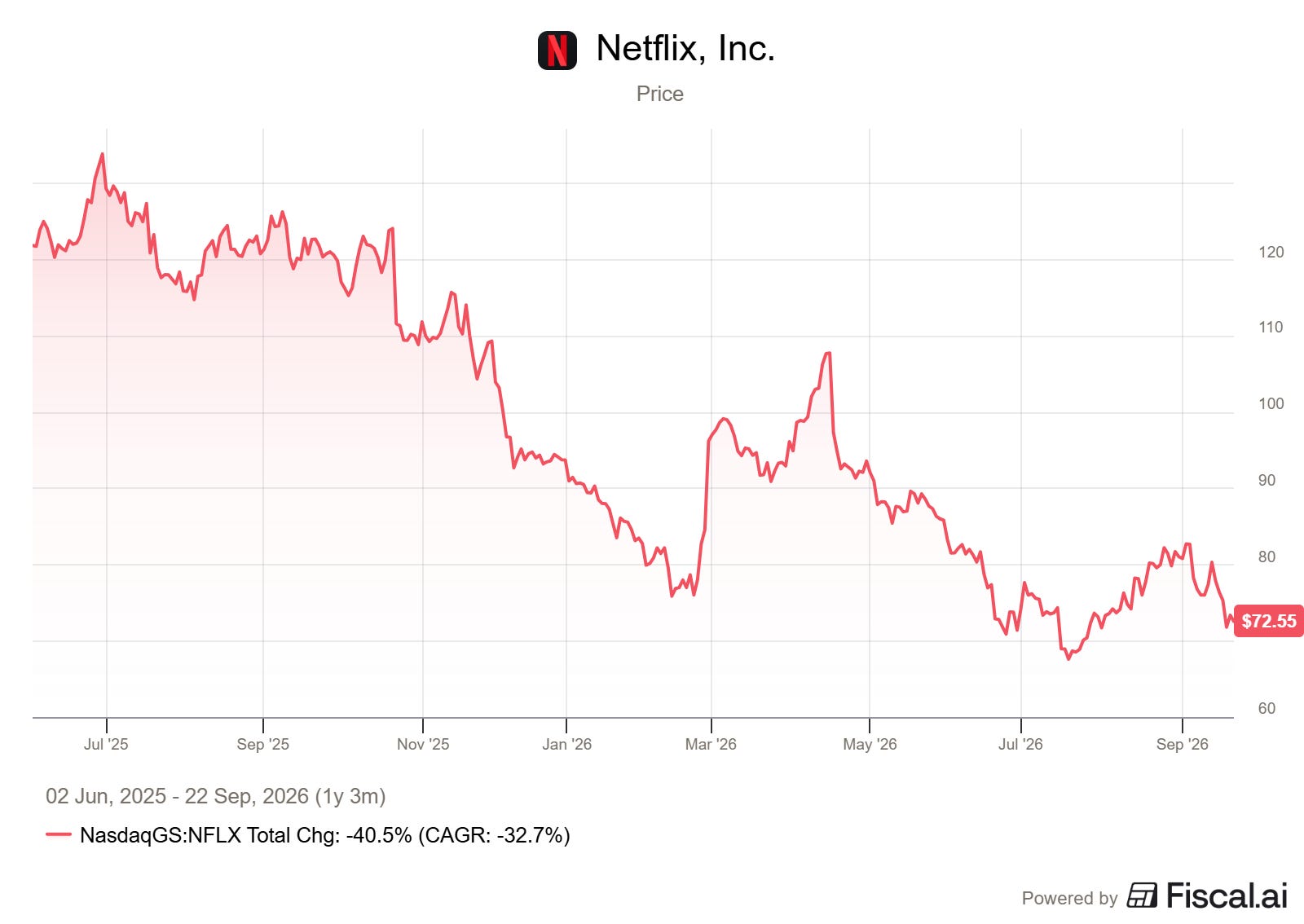
The decline started with Q2 ‘26 results that were in line with Netflix’s guidance but below analyst consensus, along with the simultaneous announcement of a cut to the “What We Watched” engagement report, moving from semi-annual to annual publication starting in 2027. It’s the second disclosure reduction in ~15 months, as Netflix hasn’t published subscriber details since 2024.
Then, Q4 ‘25 to Q2 ‘26 marks the third consecutive quarter of slowing growth. Even though overall growth remains positive on an annual basis, the market is concerned about these consecutive declines.
Additionally, on October 27, 2025, Netflix reported a one-time Brazilian tax charge of $619 million, which lowered analysts’ estimates and triggered a 12% drop in the stock price.
Furthermore, the decline continued in connection with negotiations over the acquisition of Warner Bros. in December 2025, when the stock lost 12.9%. Shareholders and the market were wary of the deal’s terms. In February ‘26, a rebound occurred following the halt of discussions, which was a positive signal for capital allocation.
Bear thesis
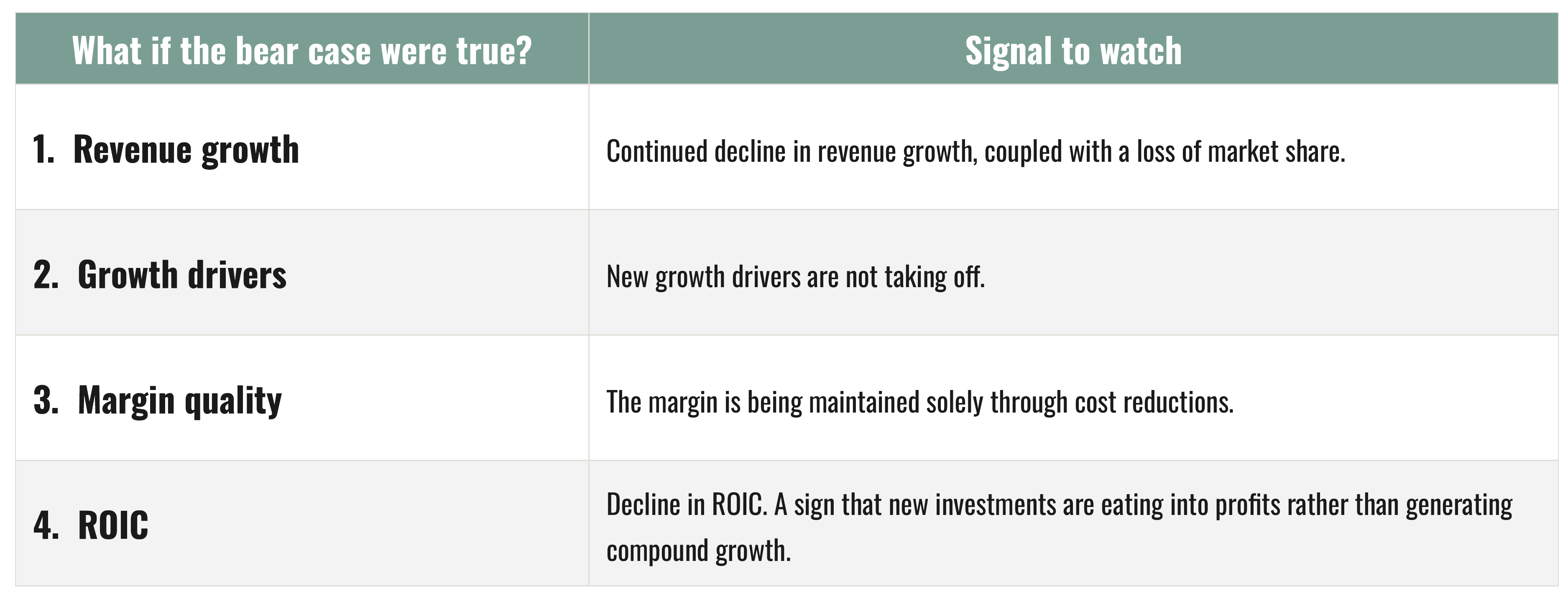
Slowdown in Growth
Growth is slowing quarter after quarter, which ultimately hampers margin expansion and net income growth.
It is possible that increased competition from other streaming services, consolidation among existing players at Netflix’s expense, and indirect competition will ultimately prove too much for Netflix and for the entire industry.
In that case, even if the market expands, no player will turn a profit.
The U.S. and Canada market appears close to saturation, with growth of only +10% in Q2 ’26, compared to +21% in LATAM and +16% in APAC.
Furthermore, the loss of data resulting from the reduction in the “What We Watched” engagement metrics is detrimental and could be used to mask Netflix’s poor results.
We should also consider competition from all other forms of entertainment that could take over. Customers are always free to leave.
Disruption risk
Generative AI is a potential source of disruption: Netflix could benefit from it in the future or be harmed by it. Independent studios or other tech companies could leverage these new technologies to create better content, faster, and at a lower cost.
Legal risk
Given Netflix’s size, acquiring competitors would likely face regulatory opposition. It would have to settle for acquiring fledgling studios or platforms.
This last point is more hypothetical, but worth mentioning:
There is always a regulatory risk, particularly in the European Union (a region known for such regulations…) with quotas for high-cost European content or a requirement to disclose the algorithm data on which part of its competitive advantage is based.
Bull thesis
Netflix is the No. 1 streaming service
I’ll go back to the beginning of the section on competitive advantage, which, in my opinion, is the jewel in the crown:
I invite you to ask the people around you: If you had to keep just one streaming service, which one would you choose?
I may be biased, but for me, the unanimous answer is Netflix—even among those with children, where you might expect competition from Disney+.
This is my firm conviction on this matter, which resonates with the times I hear that Netflix has won the streaming war beyond just market share.
And I don’t know about you, but at the same price point as YouTube Premium and Netflix, I find Netflix to be of much higher quality. Netflix is the king of entertainment accessible from home, entertainment that’s shared much more readily than a video game.
Growth Drivers
The company still has significant opportunities to increase its revenue in its market by taking market share from television, where it currently holds only a 7% market share, in a global market that continues to grow at a single-digit rate.
In addition, the following segments can also contribute to continued growth:
Advertising, projected to generate $3 billion in revenue
Video games, which are growing rapidly, particularly among children, with nearly a 600% increase year-over-year, from a small base though.
Live sports, currently held by national networks. One can imagine that Netflix’s clout allows it to secure these popular events. That said, this is no different from other streaming players. Rather, it’s a point in favor of these players over traditional TV.
While Netflix has grown in terms of subscriber numbers, it can also grow by expanding the depth of its offerings with more channels per user.
Capital Allocation Discipline
Netflix has demonstrated excellent discipline, particularly through its refusal to acquire Warner Bros. Discovery: most acquisitions result in a price that exceeds earnings, especially during periods of market optimism or euphoria. It’s reasonable to assume that this discipline can be put to good use in segments that serve as growth drivers.
Furthermore, Netflix possesses the essential assets (the brands of its internally produced hit series and its distribution network) and can acquire AI studios to address the growing threat of disruption without raising red flags with regulators, as long as these studios remain small. Generative AI is already being used in approximately 300 productions by 2026.
Amid the arguments for the bear case, there is a fine line that Netflix’s management can reasonably tread. They certainly have the cards to pull this off. It remains to be seen whether they’ll do so intelligently.
Before the bear case plays out, the bull case metrics would begin to stall:
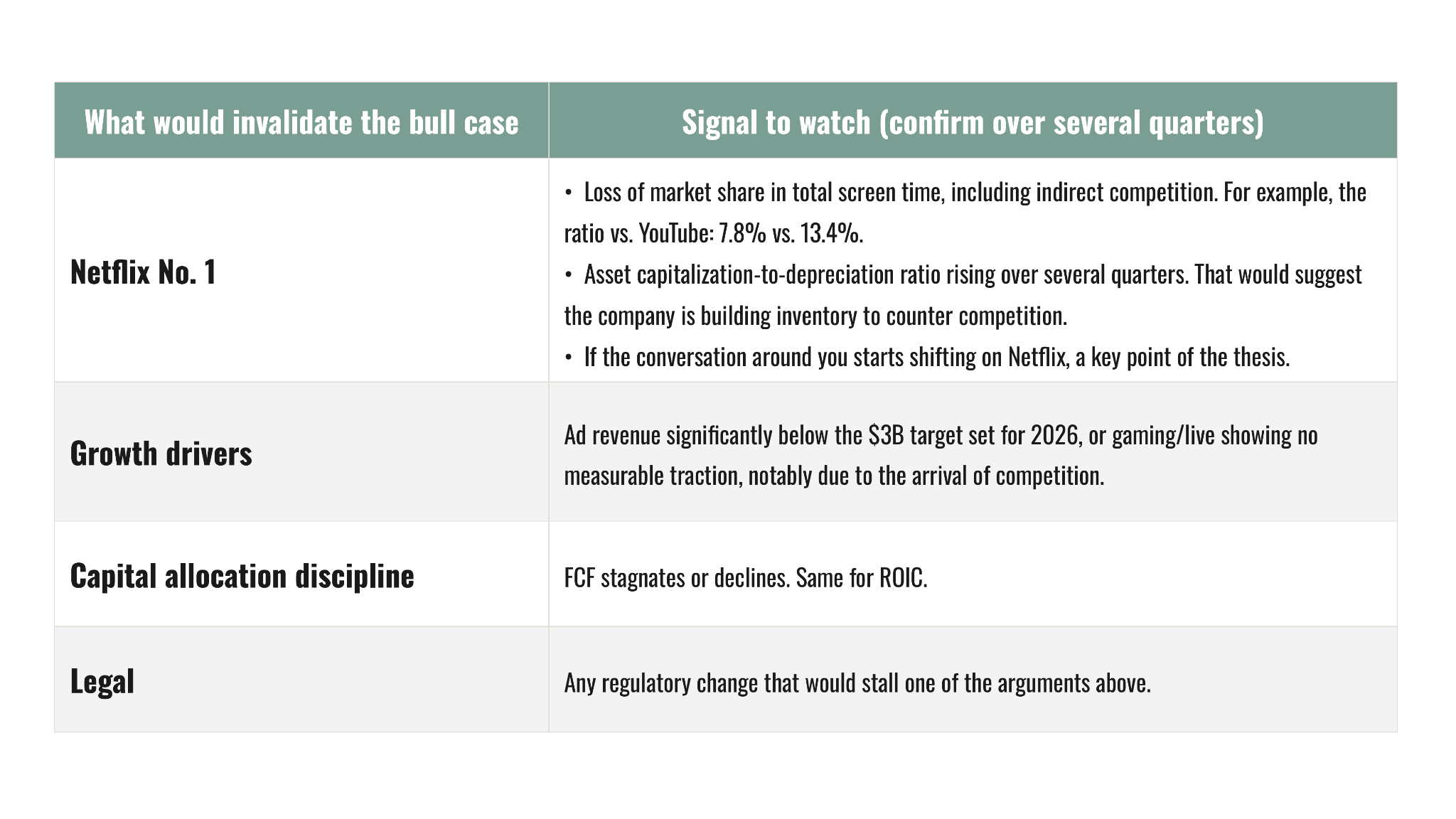
The occurrence of a single trigger is not enough to invalidate the bull case. If the case is called into question, I will publish an update to assess the new situation.
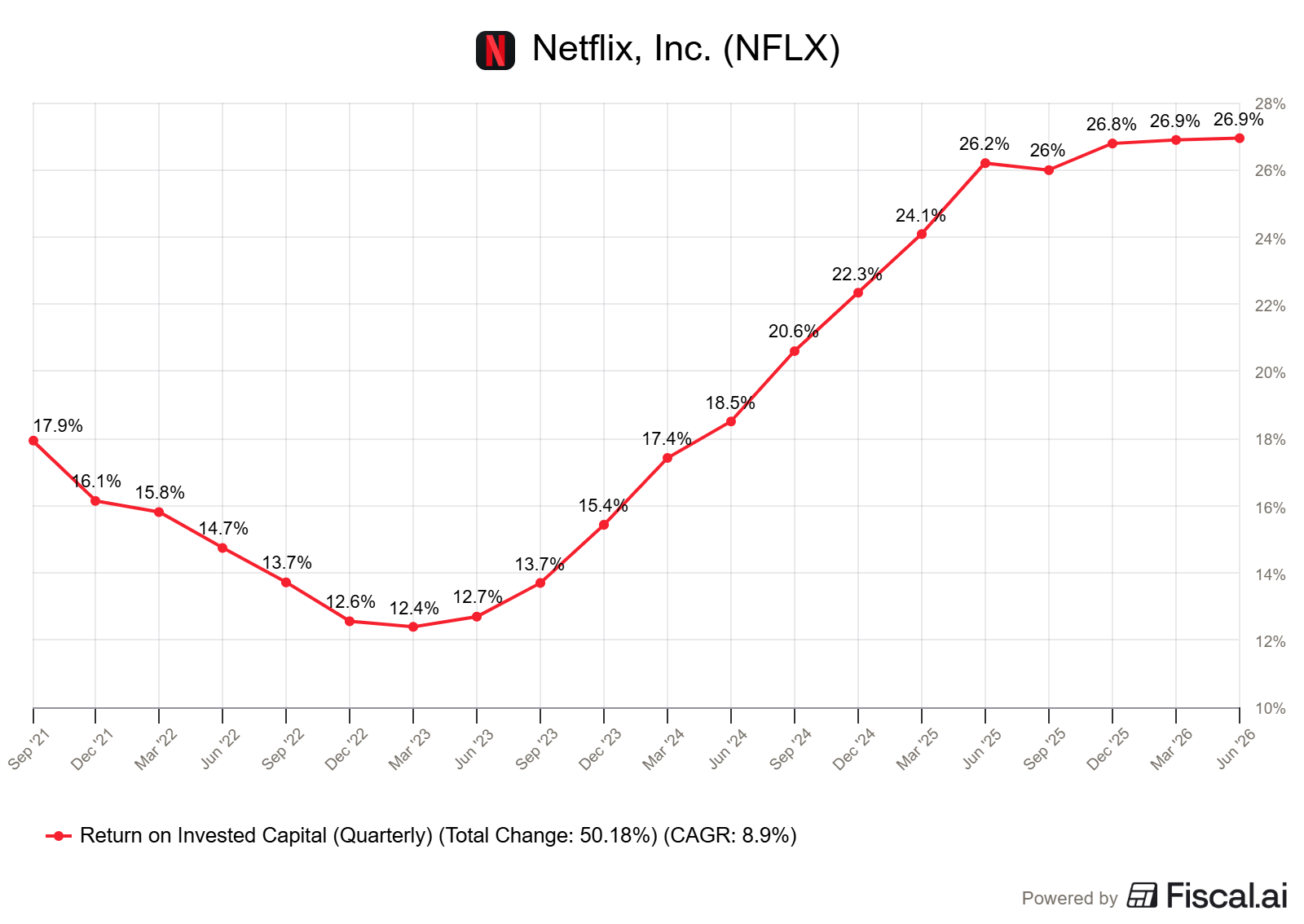
The decline in ROIC between 2021 and 2022, combined with a slight decrease in the number of users, triggered a drop of nearly 75% between 2021 and 2022. The recovery was spectacular through 2025.
Blind spots
Some arguments aren’t getting clear enough. To give you an overview, I’d like to share them with you, as they’re worth mentioning:
A central thesis in my investment strategy is the fragmentation of the world into geopolitical blocs, which is a megatrend. In my view, Netflix fits well into a multipolar world, with its international studios, and relies less on American soft power than other players. On this point, I think it’s better than Amazon. But it’s hard to generalize beyond my personal opinion.
The argument about the advertising/live sports/AI narrative underpinning the bull case isn’t unique to Netflix, but rather applies to its sector; it’s difficult to distinguish between the players at this point.
I would also have liked to tell you that Netflix is more profitable due to the scale of its distribution. Backing up this claim with facts is more complicated than I thought. The best approximation comes from ROCE. As a reminder, this ratio is calculated as Net Operating Profit After Tax (NOPAT) divided by Capital Employed (equity + financial debt).
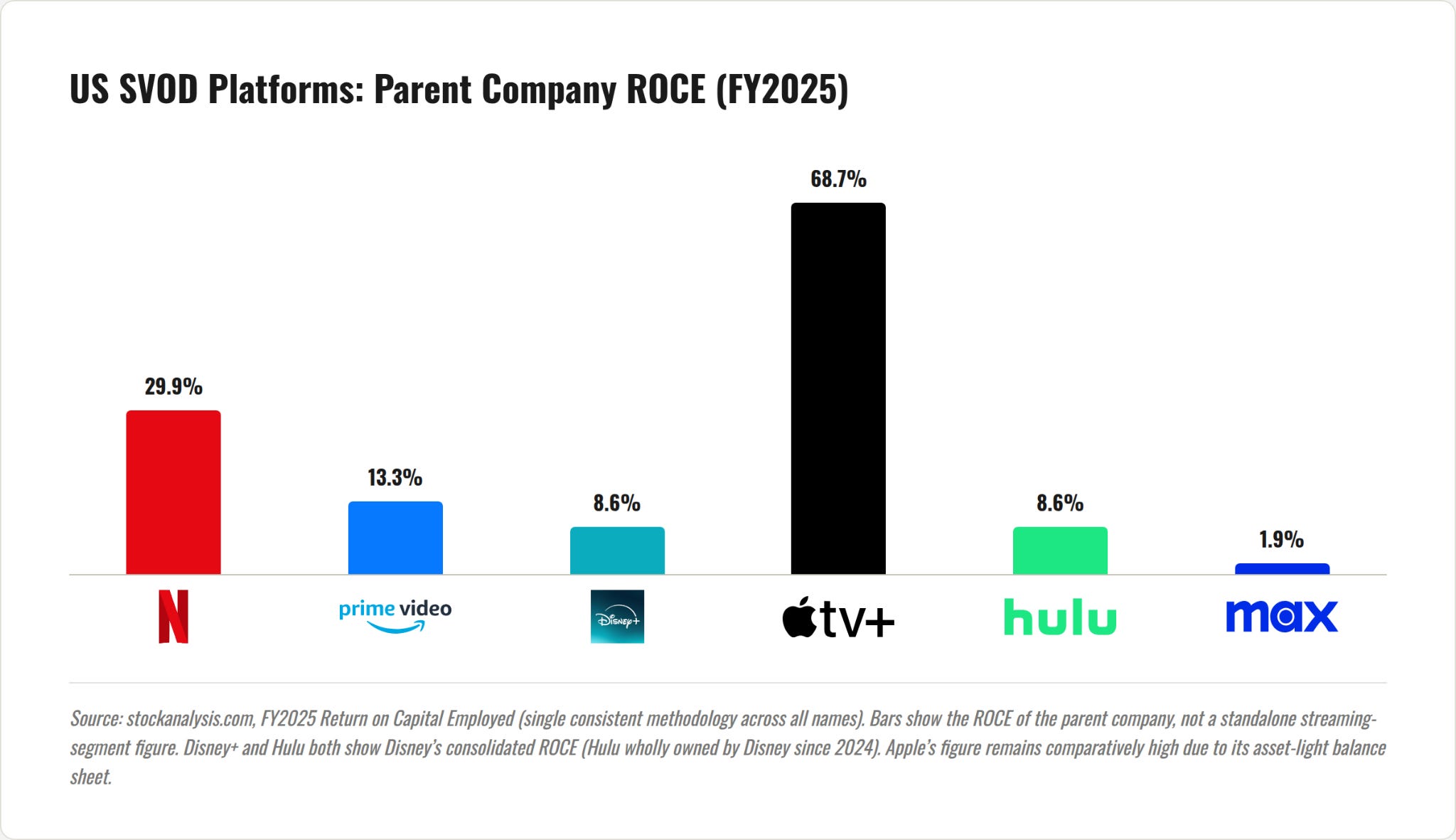
It should be noted that Prime Video is a division of Amazon, and that the ROCE figure is Amazon’s, which includes the Cloud segment (high margins) and the Retail segment (low margins), and is likely underestimated. Apple has a very high ROCE due to a very low capital base. Apple TV is not, a priori, intended to be a market leader.
Any observations regarding Alphabet or Meta would apply equally here.
Finally, information on Netflix’s content distribution is not publicly available. Management cites data as a competitive advantage, which leaves room for withholding information about any challenges encountered.
5. Price scorecard
The numbers only make sense if you’ve read the two theses section. As Aswath Damodaran puts it, “numbers without stories to back them up are exercises in financial modeling.”
The scorecard below requires an important assumption, being the continuity of a normal economic environment, i.e. without recession, major credit event, market crash.
I will someday write an article about how to deal with these conditions.
Any of these could push the stock below the bear case shown here, temporarily, independent of the company’s underlying performance. All figures in the scorecard are pre-tax and pre-fees. Run the numbers for your own situation before drawing conclusions.
The price scorecard map
The assumptions are the following:
For the revenue, it goes from 6% per year in the bear case, to 10% per year in the central case, and 15% per year in the bull case. Quite conservative for the bull case.
The margins may expand thanks to the operational leverage in the central and bull cases, but as conservative assumptions, they stay flat at 24.3% (the one from the FY2025).
Share buybacks of 4% per year in the central and bull scenarios.
The selected P/E ratios range from the 2022 low to the July 2025 high.
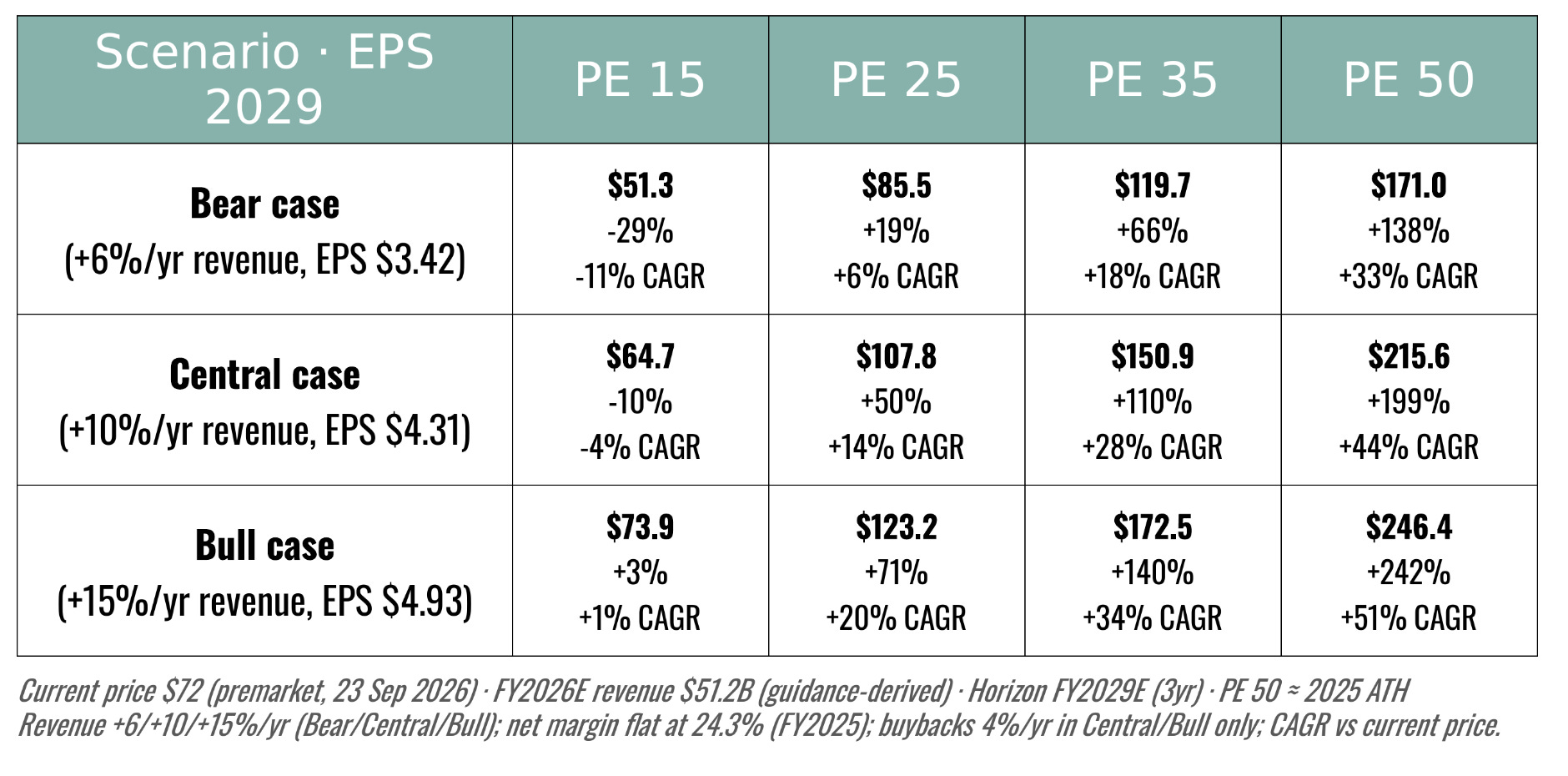
My conviction sits at the $172.5 scenario or higher (bull case x PE 35). Also consider that the gap could close next year ; Netflix could double. In that case, I would probably sell and find another candidate.
The re-rating will mainly depend on the catalysts covered in the next section.
6. Momentum
Overall, crossing fundamentals (covered above) with momentum is an excellent way to improve your returns. You’re never right on your own, especially since a significant part of returns comes from the multiple, especially if your horizon is below 5 years.
Catalysts
Next quarter results: They are scheduled for October 20. We’ll see whether growth rebounds, stagnates, or continues to slow. Will the operating margin rebound in the second half of the year, as the seasonal pattern would suggest, or will it continue to decline on a year-over-year basis? Advertising revenue compared to the ~$3 billion 2026 target is also something to watch this quarter.
Completion of Paramount-Skydance's Acquisition of WBD: On September 21, 2026, Paramount settled the antitrust lawsuit filed by state attorneys general, the last major obstacle to the deal; David Ellison (CEO of Paramount-Skydance) says he expects the deal to close “in about two weeks”, so around early October 2026. The stock already seems priced in, but we’ll have to see if there are any potential surprises.
AI disruption: An Adobe-style scenario is not out of the question, with AI-generated competing movies or TV shows hitting the market, given the market’s perceived fears of disruption. This would push the PE ratio toward 10 or 15.
A rerating from superinvestors buying the stock is still possible, but as Bill Ackman already owns the stock, a part is already priced in. Berkshire Hathaway could buy and make the stock go up, but I think there are few that could do so.
When to enter the stock?
The market hates uncertainty and has already started a significant decline in the share price. So you need to track the price to see where it bottoms. I see three possible strategies:
Buy the dip:
I would wait for analysts to stop cutting their outlooks.
The likely target zone is a PE TTM of 20-25. It’s hard to give a PE ratio as a support level, since the company has broken through its last support (200-day moving average) on the way down.
This works if Netflix surprises to the upside next quarter, and fails if Netflix disappoints or worries the market for a second quarter.
Capitulation:
It’s possible we head toward a bearish scenario if the company reports well below expectations. In that case, you have to wait for capitulation, which shows up through several signals, such as above-average volume, or RSI <20.
So far, Netflix hasn’t shown signs of capitulation.
DCA: the way to reduce risk (the non-choice) is to run a DCA every month, if that’s your approach. I personally prefer to enter in one or two tranches.
As for me, I plan to open a position once the price stabilizes, and I’ll let my subscribers know when I do. I’m prepared to add to the position on further weakness or capitulation. There’s no rush: the thesis will probably take 2-3 years to play out.
Final Thoughts
Netflix has won the streaming war, but the battle for user attention is a war of the mind where every form of entertainment fights for its place.
I’m fairly bullish on this stock because I believe the forces at work in the market structure and its competitive advantage are working in its favor, and that the average user prefers Netflix. But only time will tell if management can implement the right strategies to sustain its impressive growth. Here, memory is the key to our hope: Netflix has impressed us in the past and may well continue to do so for longer than we think.
Disclaimer: This content is for educational purposes only and does not constitute investment advice. See our full disclaimer.