
Introduction
The market is full of extremely attractive small-cap stocks with a long-term growth outlook and appealing valuations. These are compounders to hold for years, providing a stable foundation for your portfolio. The real difference isn’t in making 50% a year for 3 years, but 20–30% for 10 years or more.
And the company I’m recommending today is one of them. Far removed from the AI hype and its speculative valuations, it’s a long-term play in a sector with a lot of room to grow.
This is the logic of Chris Mayer’s book, *100 Baggers*, which examined 365 stocks that increased 100-fold between 1962 and 2014.
Mayer’s criteria are described in the image below:
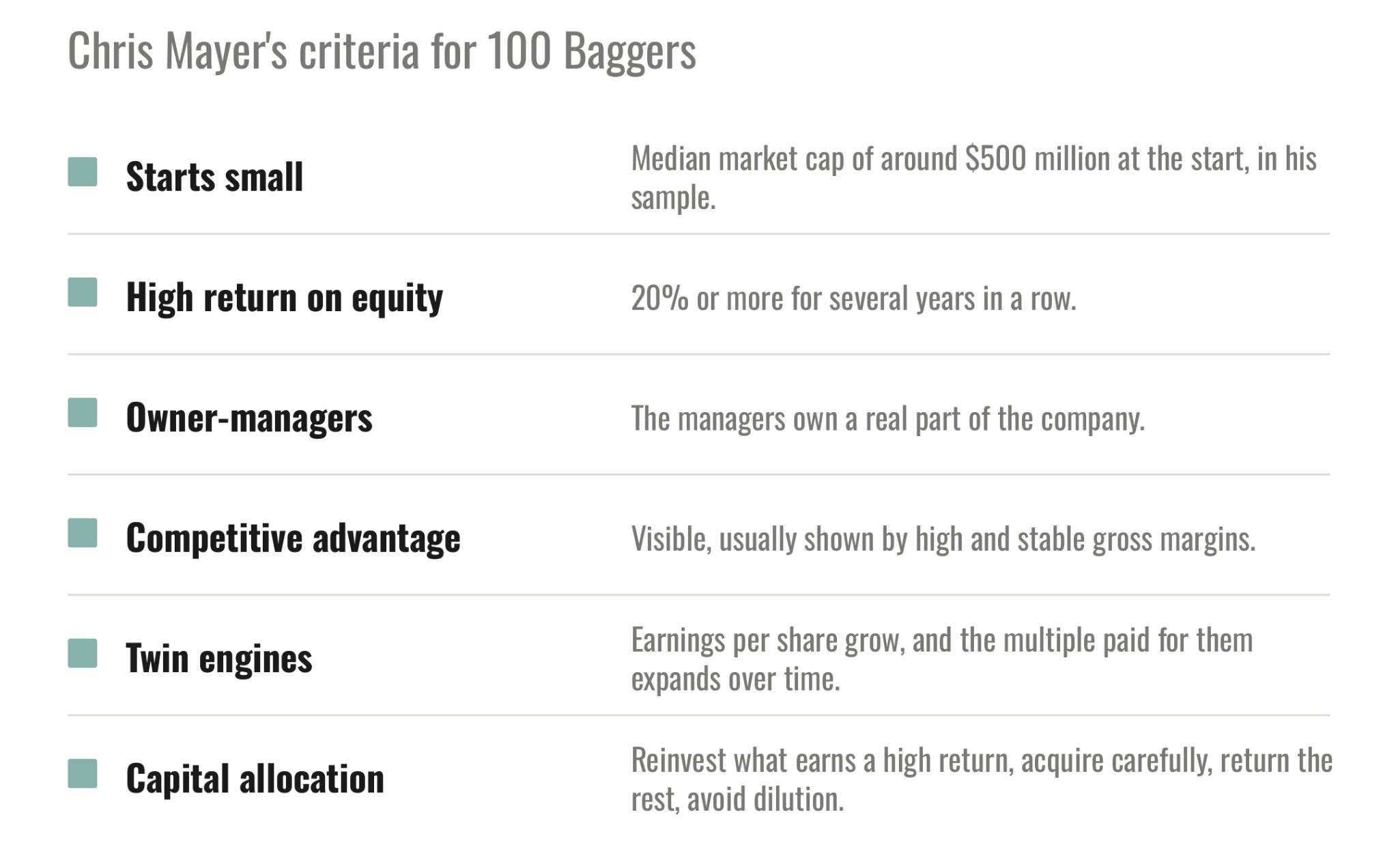
And the company I’m suggesting to you meets almost all of the criteria.
It is Baviera, a Spanish eye surgery group, formerly Clínica Baviera.
The structure of my deep dive is standard. Learn the process in the dedicated articles in the learning section.
The whole article is long because it covers a lot of ground, and short because I try to give you a synthesis of the points. So I start with a “short version” for those of you in a hurry.
The Short Version
Baviera is a Spanish eye surgery group that has grown steadily for almost twenty years. It has not raised capital since its 2007 IPO, it earned 21.6% on invested capital in 2025, and its new clinics are paid for by its own cash flow.
The growth is not spectacular, but it is steady. And what could happen to it? The business is very solid, and it relies on opening new clinics and making acquisitions to expand internationally or consolidate its position in a given country. The market is regulated because it requires doctors to perform surgeries. They have already succeeded in doing so in Spain, where they are the market leader; they have established a presence in Germany and Italy; and they are well on their way to establishing a profitable presence in the United Kingdom.
I think Baviera is the kind of stock you can hold for ten years and end up with around four times your money, with peace of mind.
1. What Baviera does
History
Baviera was founded in Valencia in February 1992 as Clínica Oftalmológica Baviera, a single eye consultation center started by Dr. Julio Baviera and his family. Starting in 1996, the company began opening clinics throughout Spain, at a rate of about three per year beginning in 1997. The company was led for nearly thirty years by Eduardo Baviera, Julio’s brother.
The 3i fund, which currently owns the Action stores, acquired a stake in the company in 2005 and then sold all of its shares during the initial public offering in March 2007 on the Madrid Stock Exchange. At that time, the group had 36 clinics, all located in Spain.
The company’s expansion into Europe took place in June 2008 with Baviera’s acquisition of CARE Vision Germany GmbH and Care Medical Services Holland, giving it a presence in Germany and the Netherlands. By early 2009, the group had 15 clinics in Germany, the Netherlands, Italy, and Austria.
In August 2017, the Chinese group Aier Eye Hospital acquired an 86.83% stake in the company. It has since sold a portion of that stake and still holds 73.23%.
In July 2024, Baviera acquired Optimax, a British group of 19 clinics that was undergoing restructuring. Finally, in December 2025, the company was renamed simply Baviera. Luis Grávalos succeeded Eduardo Baviera as CEO on March 26, 2026.
Clients
Baviera treats patients who come in for various types of treatment:
Refractive (laser) surgery to treat presbyopia, myopia, hyperopia, or astigmatism. These are generally patients who want to stop wearing glasses. They pay for the procedure in full, or almost in full, with a reimbursement or a discount from an insurer in such cases.
Cataract surgery: replacement of the natural lens with an intraocular lens, for older patients. Cataracts are covered by the public health systems, so who pays depends on the country. In Spain, Baviera presents private surgery as the answer to public waiting lists, and its patients pay themselves or go through an insurer that has an agreement with the group. In Germany, statutory insurance pays for the operation with a standard lens, and the patient pays for premium lenses.
Patients also come in for other conditions related to general ophthalmology, for consultations and examinations.
In 2025, about 16% of ophthalmology revenue came from agreements with insurers, which provides information on the overall level of patient reimbursement.
The cost of the surgery will depend on the technology used by the healthcare professional, and does not depend on the refractive error being corrected (myopia, hyperopia, etc.). The company also offers 0% interest loans through its partners.
The company, which began in Spain, subsequently expanded into Germany, Austria, Italy, and the United Kingdom, as outlined in the presentation below.
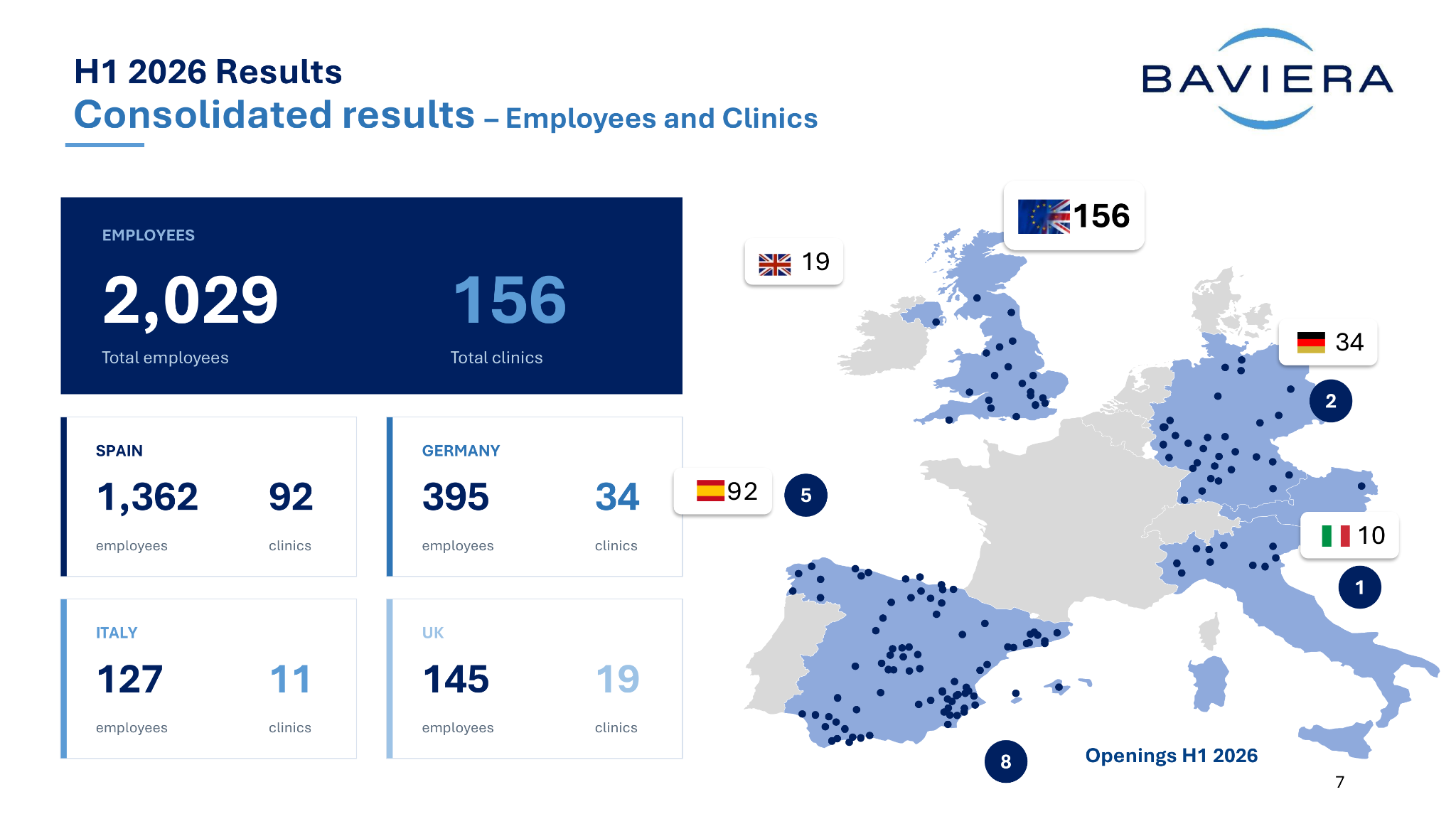
The customer base is very spread out: Baviera received about 180,000 patients in 2024 and says it has performed some 2 million operations since it started. In 2006, about 60% of new ophthalmology patients in Spain came on the recommendation of former patients. Because a laser operation is bought once, growth depends on winning new patients every year.
The data I could find indicate that the market is growing by about 5% a year.
Suppliers
Baviera’s main resource is its doctors, and most of them work for the group as employees. At the end of 2025 it employed 272 doctors: 224 in Spain, 38 in Germany, 9 in Italy and one in the UK. Almost all have permanent contracts, and just over half work part-time. In the UK the doctors are not employees: they work under a commercial contract with the group. The group also calls on outside collaborators, doctors and companies, to cover peaks in demand.
Employed doctors cost €49.2 million in 2025 and outside doctors are included in the €23.6 million “professional services” line item, which could include all service providers, including the housekeeper and the plumber.
Like any ophthalmology center, it requires medical equipment, which is divided into consumables and capital assets (for example, from Bausch & Lomb or Carl Zeiss Meditec). Replacing a machine is complicated because the entire operation relies on mastery of that machine, and there is a risk of delays or failure.
Almost all clinics are rented, so landlords are suppliers too.
Competitors
Competition in this type of business is local, since people generally don’t walk 500 miles to undergo a procedure that is fairly common.
For non-reimbursed procedures, competition comes from other ophthalmology groups, which are listed below by country:
In Spain, it’s mainly Miranza, launched in 2020, and it reached €128 million of revenue in 2025, vs €204 million for Baviera. Our company is more standardized and highly advanced in refractive surgery, while Miranza positions itself more as a network of centers of excellence offering specialized care.
In 2024, the ophthalmology clinic market was worth approximately €720 million, with Baviera holding a market share of about 25% and Miranza holding 15%.
In Great Britain, there is Optical Express, the leader in laser technology, with £146.5 million in revenue in 2022 vs £16 million for Baviera in 2025.
In Germany, while Baviera generated €59 million in 2025 with 32 clinics, there are numerous alternatives, including Sanoptis, with its 220 locations, Artemis (120), Veonet (84), and Augenzentrum Eckert (72).
In Italy, Baviera Italia accounts for approximately 7% of the company’s 2025 revenue with its 11 clinics, or about 21 million euros, less than Vista Vision, its main competitor, which generates 65 million euros with its 12 clinics, with a broader range of ophthalmology services.
In most cases, the market remains fragmented. When it is not large groups, it consists of individual practitioners or small groups of a few practitioners.
Competitive advantage
Since 91% of revenue comes from surgical procedures, this section focuses primarily on that area, with the remainder split roughly evenly between consultations and other conditions (retina, oculoplasty, glaucoma, etc.).
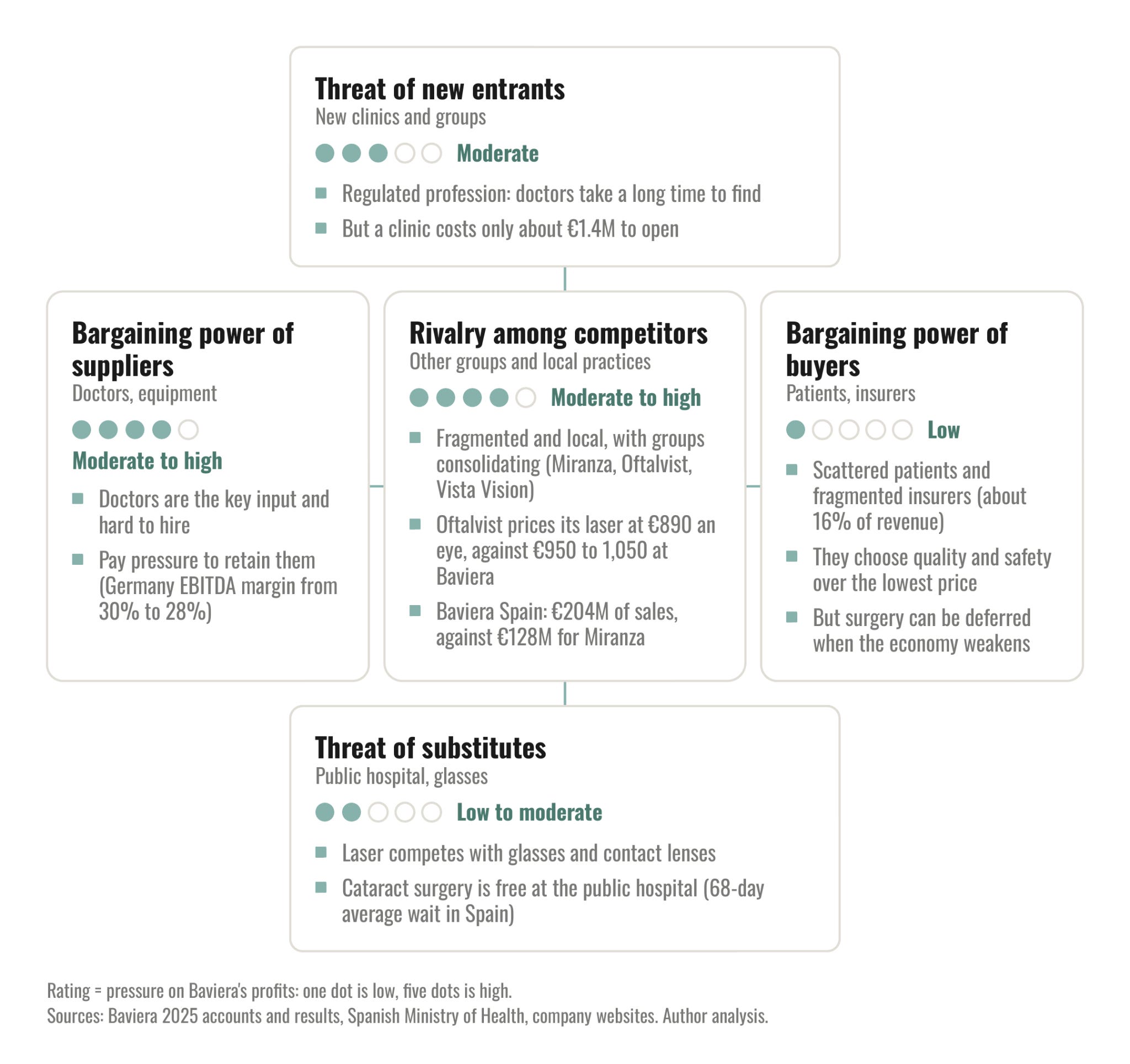
There is little competition with the public hospital as laser surgery and presbyopia treatments are not covered by public systems, so Baviera competes there with private clinics.
Cataract surgery is different: the public system pays for it, with a standard lens and no bill for the patient. What Baviera sells on top is choice of the date, the surgeon, and a better lens if the patient wants one. The average wait for cataract surgery in the public system was 68 days at the end of 2025, and only 2.6% of patients waited more than six months.
Critics also argue that private clinics take the simple, profitable cases and compete with public hospitals for the same doctors. I found no data showing that Baviera weakens the public system.
As for barriers to entry, this is an industry that depends on the number of practitioners, and regulations prevent unregulated entry into the market. Not just anyone can put on a white coat and become an ophthalmologist overnight. And currently in the EU, it often takes quite a long time to find a doctor.
As a result, there is cost pressure to retain doctors within these facilities.
Compared to practitioners working alone or in small groups, the opportunities for reinvestment and cost-sharing result in higher profitability.
The company therefore enjoys, like its competitors—the other groups—undeniable advantages:
brand visibility,
very extensive network,
more consistent processes,
a strong clinical focus on refractive surgery,
greater transparency regarding prices and financial performance.
It’s a very profitable business with an ROIC ranging from 20 to 30 percent depending on the year (except for 2020, but that’s because of COVID), far above any reasonable cost of capital.
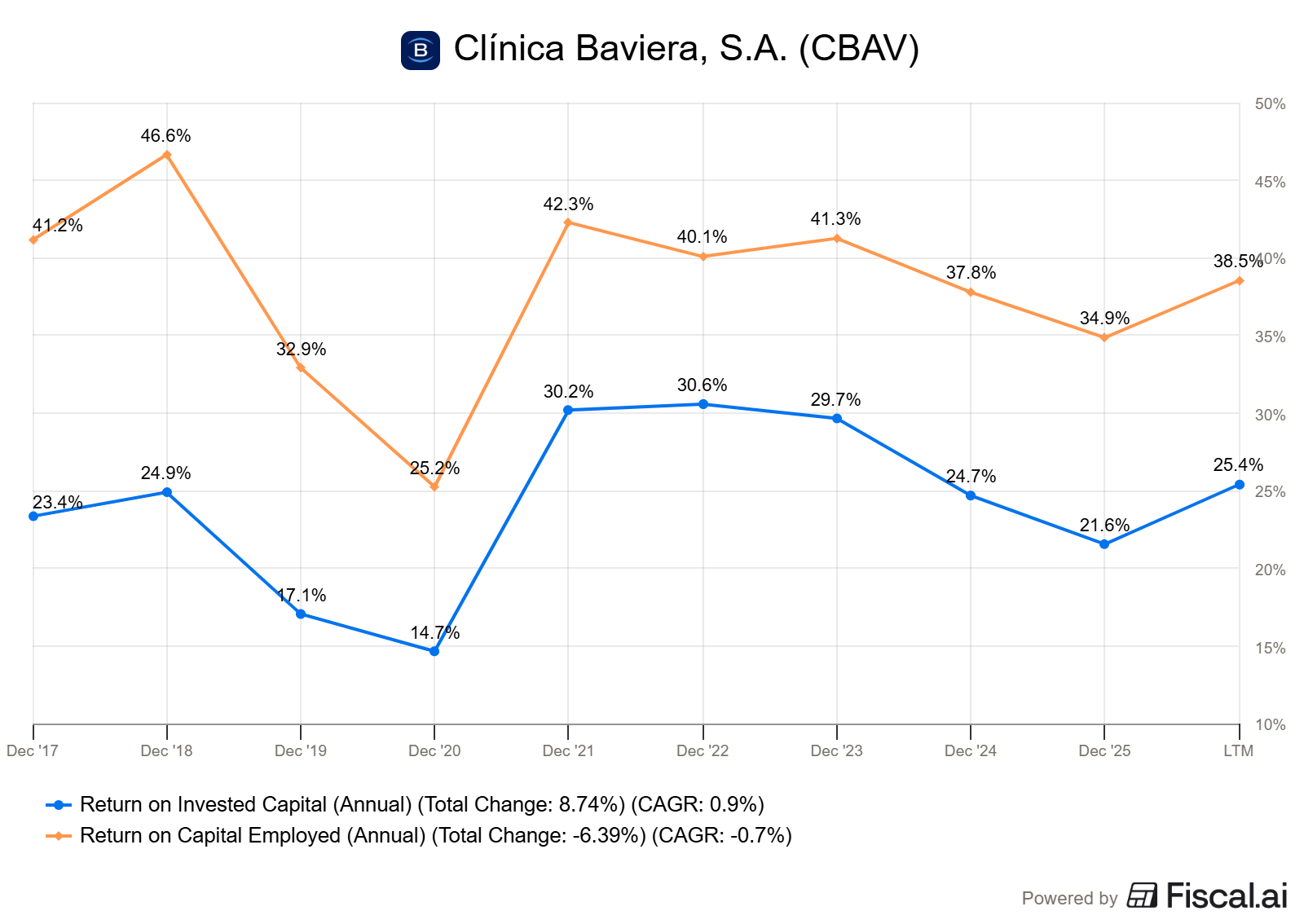
Buyers are scattered and have no bargaining power. The same goes for insurers, which are fragmented. It’s a network that grows through word of mouth, so switching costs are based on reputation. Buyers don’t have any particular incentive to return. People don’t visit an ophthalmologist regularly to have surgery.
Furthermore, this is a request related to operations that will depend on economic conditions. Although it is a healthcare expense, it can be deferred so that the cost is covered later.
And while this may seem obvious, it is a key aspect of any competitive advantage: customers do not automatically seek out the cheapest option; instead, they prioritize quality and safety.
Here is the summary slide. Note that this image should be read against the alternatives.
2. Financials
Key financial metrics
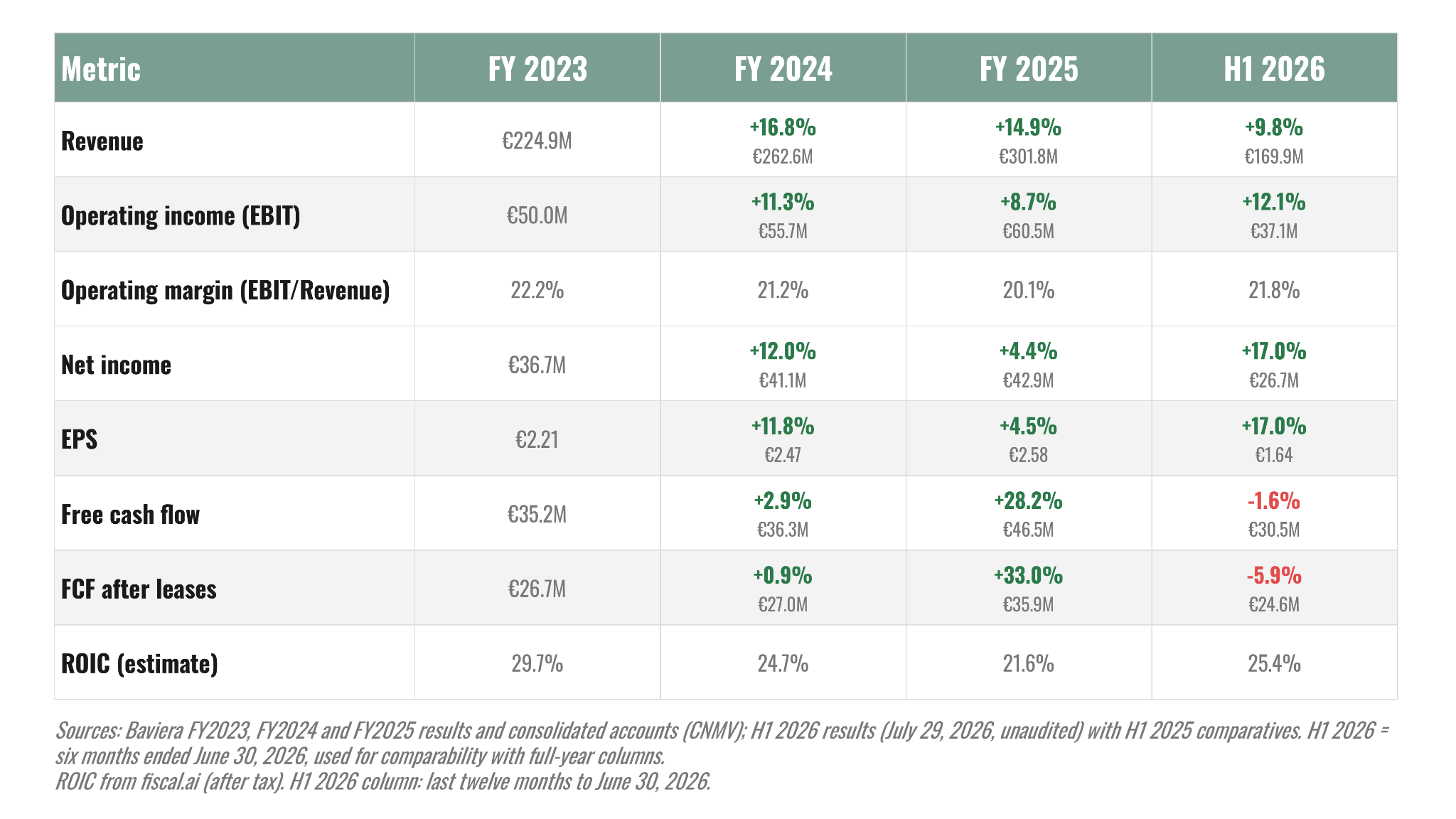
Watch out when interpreting the figures; these are for a half-year period in 2026. You must double the amounts and adjust for one-time items to compare the years.
Commentary
Revenue
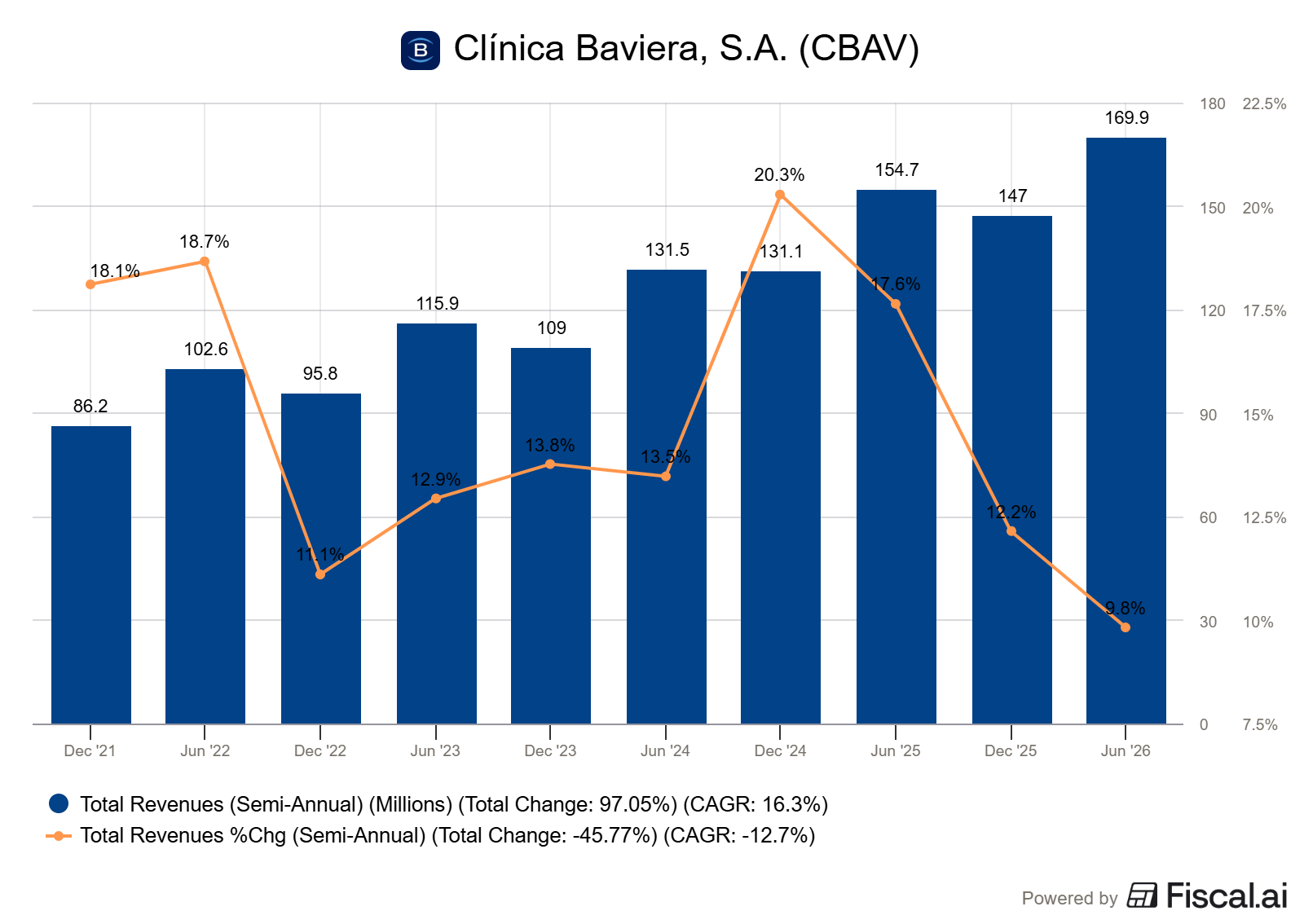
Since its IPO, the company has grown in revenue at a rate of 9% per year. One observes that growth has been slowing since 2023: the trend varies as a function of the opening of new clinics.
Useful clarification: the figures published for 2024-2025 overestimate growth by a few percentage points because of the integration of Optimax (United Kingdom). In the first half of 2026, without revenue from the UK, growth would have been 8.8%.
Operating Margin
The EBIT margin (which accounts for most of the rents in depreciation according to IFRS standards) declined in 2024 and 2025, notably because of the acquisition of Optimax in the United Kingdom. In Germany, profitability fell because of the increase in salaries paid to retain doctors. In Italy, it decreased because the group hired staff in anticipation of its openings and increased its marketing expenses to move from a B2B model to a B2C model. Spain experienced the opposite evolution and recorded an improvement.
The first half of 2026 highlighted an operating leverage effect: expenses increased by 8%, while revenue grew by 10%.
Net Income and Free Cash Flow
The slowdown in net income growth in 2025 is explained by an entire year of losses in the United Kingdom, still linked to the integration and turnaround of Optimax, as well as by a higher tax rate (28.6% versus 26.5%).
The company compares the year 2025 to a pro forma 2024 fiscal year, which gives a net income growth of +15%. The published comparison indicates +4%, and it is the one that should be used. The number of shares remaining unchanged (16.3 million), earnings per share therefore simply follows the evolution of net income.
Baviera also pays a negligible sum in respect of share-based compensation, of approximately 0.44 million euros per year, and 163,043 stock options at 23 euros (1% of the shares) will become exercisable in 2027.
In the first half of 2026, the financial result represents about two points of the 17% increase. The decline in free cash flow (FCF) in the first half of 2026 (−1.6%) is not worrying, because it reflects the timing of payments. Meanwhile, the operating income rose by 12%. After lease payments, the group converted between 66% and 84% of its net income into cash between 2023 and 2025. Quite a good score!
Balance sheet
As of June 30, 2026, Baviera reported a net financial position of +41.7 million euros after paying a dividend of 25.1 million euros during the first half of the year. Including lease obligations, net debt amounts to 19.4 million euros. And given its EBIT, this debt can be repaid in about four months.
The assets held by Baviera consist mainly of what a clinic needs to operate. It would be an overstatement to call this an “asset-light” business, where capex is 3-5% of revenue. Baviera’s capex, spent on medical equipment and clinic fit-out (the interior renovation of a rented space to turn it into a clinic), is closer to 10% of revenue.
3. Management
The new CEO
Eduardo Baviera, the company’s co-founder, led Baviera for 30 years. There is no information available regarding the reasons for the change in CEO. It is reasonable to assume that, after 30 years at the helm and at nearly 60, he would like to slow down while maintaining a more behind-the-scenes role within the company. He remains on the board as vice president and continues to oversee strategy and medical direction.
Luis Grávalos Soria succeeded him on March 26, 2026. He has spent more than 16 years with the group. He first led the Germany division, then the United Kingdom division following the acquisition of Optimax. The board says it is appointing him “to drive a new phase of growth, while maintaining the continuity of the model that has been successful in recent years and strengthening a professional, international management model focused on responsible growth.”

The data does not indicate that the successor created a plan. The only guidance is the board’s statement of continuity and a new growth phase.
Yellow flag: Not only can I find no record of the CEO currently holding shares in the company, but I also see regular sales of shares dating back to 2025. The only known new incentive is the long-term cash bonus approved on May 27, 2026. It pays out in cash, with no shares involved, and neither the amount nor the conditions have been disclosed. Alignment with management cannot be assumed.
The Majority Shareholder
A Chinese group controls Baviera. Aier Eye Hospital Group, based in Changsha, is China’s largest ophthalmology chain and is listed on the Shenzhen Stock Exchange. It acquired 86.83% of Baviera through a tender offer in August 2017. Its stake has since fallen to 73.23%. Its founder, Chen Bang, serves as chairman of both groups. Having a majority shareholder (furthermore a Chinese one) in the company has several implications:
First, the positives. The company is not at risk of a hostile takeover, and Aier is an industrial shareholder in the same industry with a long-term perspective. Also, the company has been doing well for the past nine years with this majority shareholder.
Next, the disadvantages.
Management is in charge of day-to-day capital allocation (clinic openings, capital expenditures), but the board (on which Aier holds four of the seven seats) has the final say.
Liquidity is limited, with a free float of about 18% of the market capitalization. A large seller can cause the price to drop sharply. The same is true on the upside. This also hinders the stock’s inclusion in indices and institutional portfolios.
Having a majority shareholder always carries the risk of delisting. Any significant drop in the stock price (even with solid fundamentals) would be a bargain for the majority shareholder, which could buy out the minority stake at a favorable price (with a premium on the current price), at its sole discretion.
There are currently no major tensions with China, so a scenario of serious deterioration of relations with China is one with significant impact but very low probability. The recent tensions between China and the EU have had no impact on the company.
Capital allocation
Baviera pays for its growth, its dividend and its acquisitions out of its operating cash flow.
Openings come first: capex was about €30 million in 2025, close to 10% of revenue: €15.9 million for new clinics and €14.3 million to renovate existing ones. The group opened 11 clinics in 2025 and 8 in the first half of 2026, taking the network from 148 to 156.
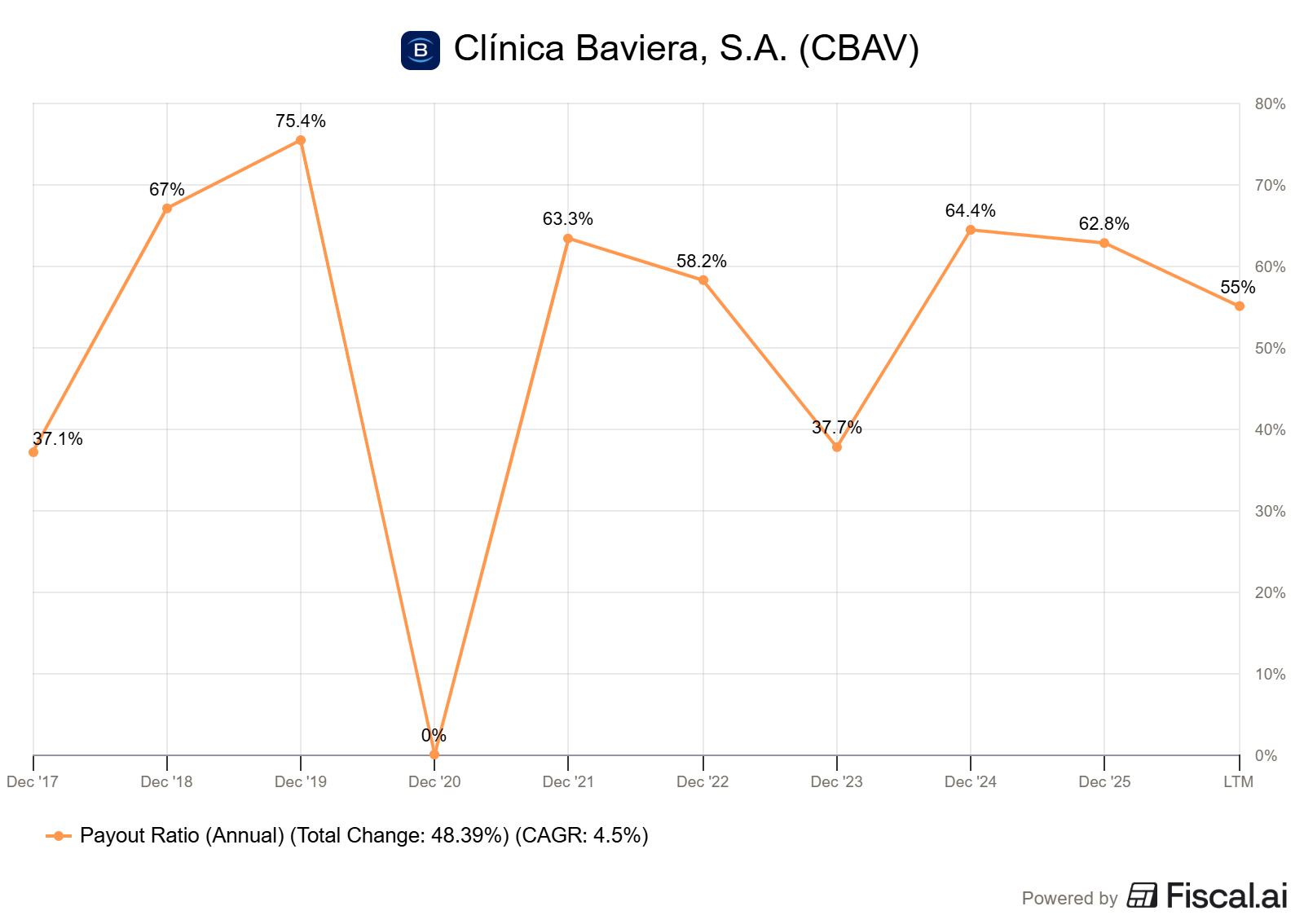
The dividend comes second. Baviera has paid €1.57 per share in each of the last two years, a payout of 68% of 2024 earnings and 62% of 2025 earnings. The cash paid out was €25.9 million in 2024 and €26.4 million in 2025.
Management knows how to seize acquisition opportunities to keep growing, notably abroad. Examples include the acquisitions of Optimax (UK) and Care Vision (Germany). Although Optimax is not yet profitable, we can expect it to become so over the coming quarters, as the business is turned around.
4. The two theses
I believe the best way to decide whether an investment is sound is to pit the bullish and bearish theses against each other. That way, I know what could happen, and knowing your position well helps you endure downturns and protects you psychologically. Considering only the bear thesis is alarmism; considering only the bull thesis is wishful thinking. This section includes both the arguments and the catalysts for each version of the story.
Why did the stock go up?
I usually write a post explaining why the stock price has fallen. But in this case, there’s no problem; the price has been rising steadily since 2023.
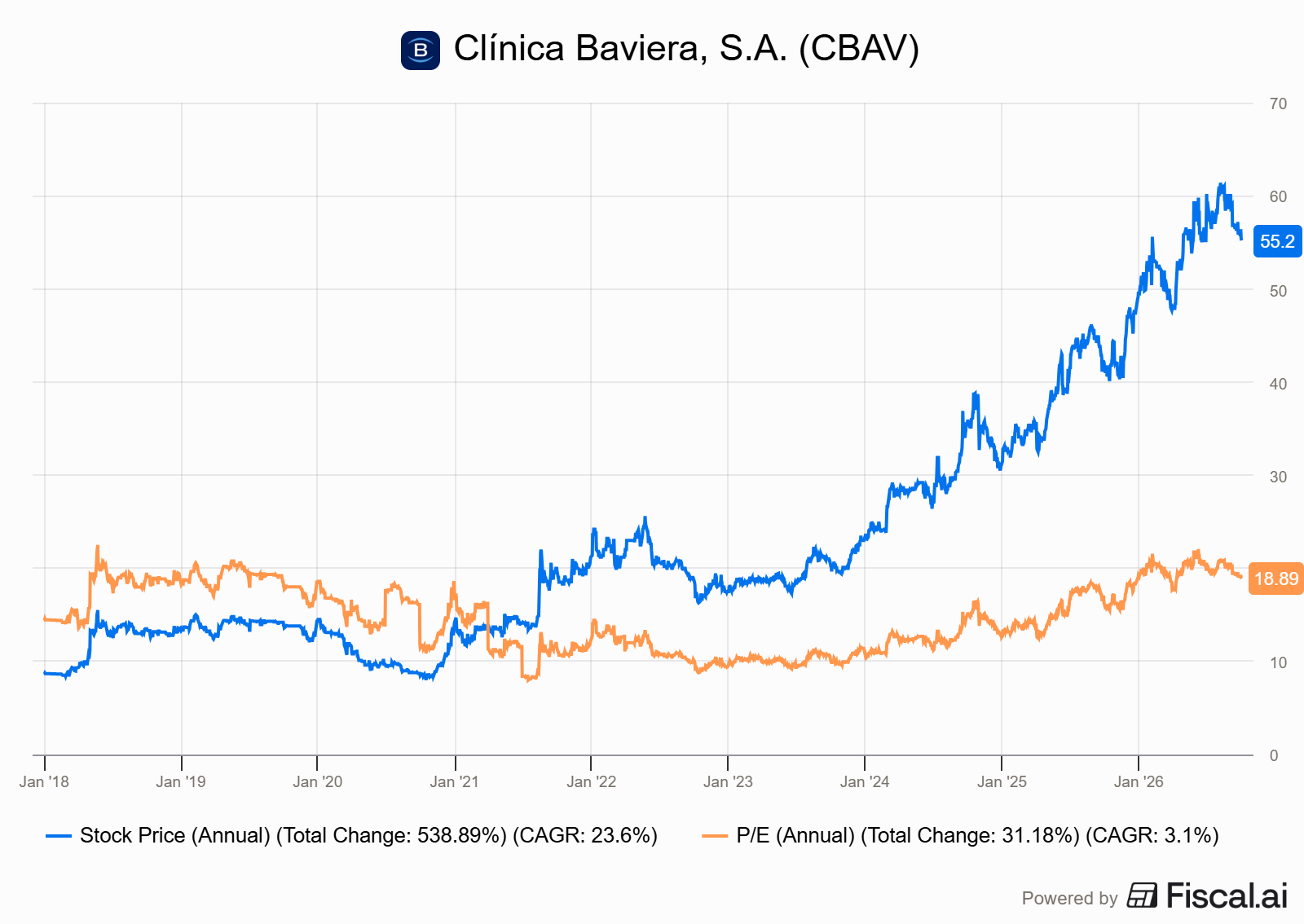
This chart shows that the rise in 2025 is driven primarily by the P/E ratio, while the rise in 2026 is driven by earnings growth. The rise in 2024 is driven by both factors.
One might think that the rise in the 2025 multiple stems from the doubling of the free float in April (from 10% to 18%), which reduced the liquidity discount. Another reason is the relatively low starting point for the P/E ratio in early 2025, which was only 13.
Currently, the company is trading near its highest relative valuation levels, with a P/E ratio of 19.
Bear thesis
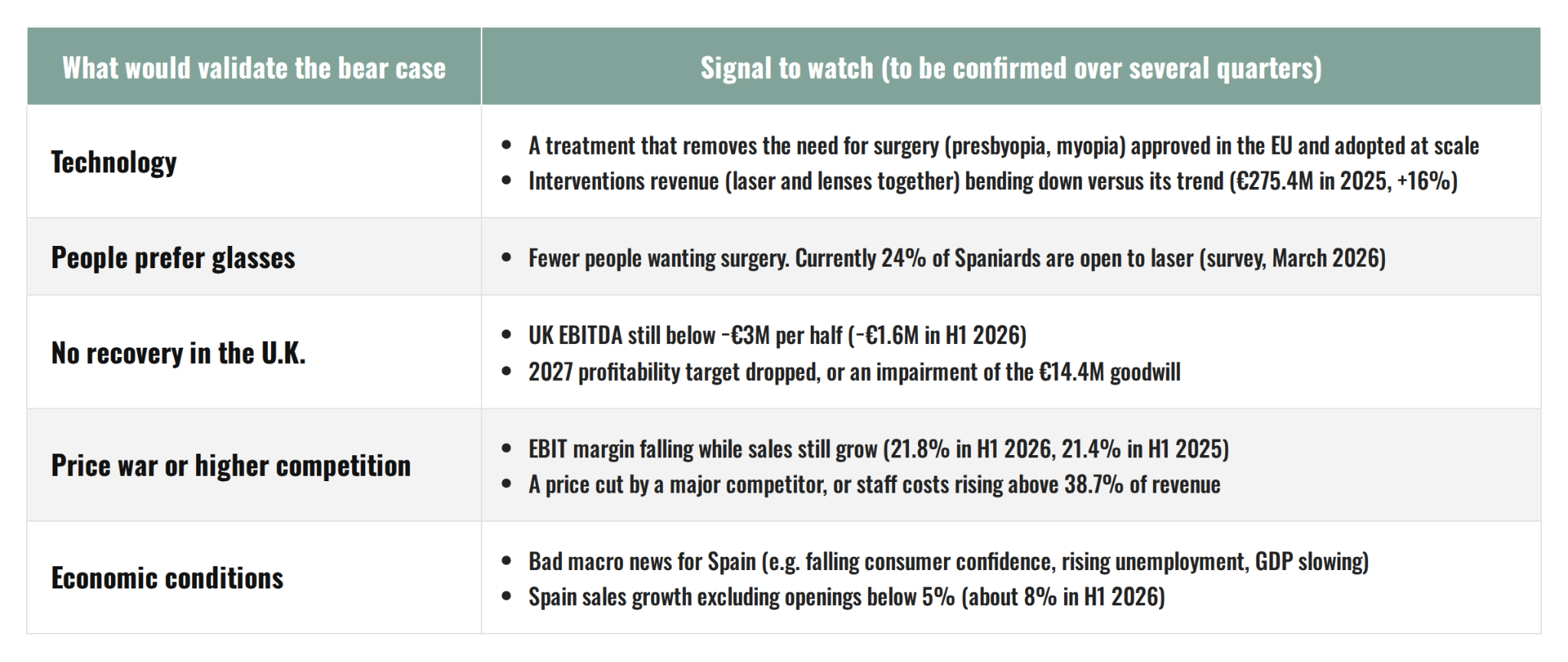
A technology that reduces the need for laser surgery
We haven’t yet found a cure for presbyopia, myopia, hyperopia, or astigmatism, but who knows? Maybe one day there will be a treatment that can prevent these vision problems. If that happens, it will be the end of Baviera’s core business.
Currently, alternatives such as implantable lenses do exist, but they still require the assistance of a doctor, so this would simply be a shift in technology rather than a true replacement. A 2017 analyst report (Renta 4) indicates that intraocular lenses already accounted for 40% of revenue, so this is a well-established practice.
There’s also the issue of preventing nearsightedness, but if glasses are still needed, that doesn’t change the bottom line: people who undergo surgery want to live without glasses.
People prefer glasses
More people keeping their glasses means fewer surgeries, and therefore lower revenue. In the case of cataracts, surgery is essential to prevent blindness, so revenue from cataract procedures remains steady. The reports do not specify the portion of revenue attributable to cataract procedures.
No recovery in the U.K.
Revenue in the United Kingdom still accounts for a small portion of the group’s total (€10.6 million in H1 2026, or 6%), but investors expect this segment to become a new growth driver. There are 19 clinics out of a total of 156, representing a potential 12% of revenue. If the turnaround is successful, this metric is expected to double. Profitability is a goal for 2027 that has yet to be confirmed.
A price war or higher competition
That is not currently the case for the price war, and healthcare services tend to be priced consistently, but this scenario is still possible if one of the competitors were determined to win the market at any cost. This is especially true since, in most cases, patients pay out of pocket.
For higher competition, this would involve in particular poaching doctors in the event of a shortage of job openings.
Economic conditions that could cause operations to be postponed
These are mostly non-essential operations that can be postponed. The economic situation in Spain has improved significantly in recent years, but that period of improvement may be coming to an end. Spain accounted for 68% of sales and 81% of EBITDA in the first half of 2026, with 52% of the clinics located there, so the company’s fate remains closely tied to the economic situation in Spain.
No opportunities left for M&A in Spain
In Spain, a transaction must be notified to the competition authority (CNMC) when the combined market share reaches 30 percent, as defined by product or service and by geographic area. This may refer to a sub-segment (such as laser surgery rather than ophthalmology as a whole) and “a substantial part of the territory.” With a 25% market share, Baviera could be affected, as it would have to grow solely through organic growth. It is a notification, and the deal could still be made (or not), depending on the regulator.
Bull thesis
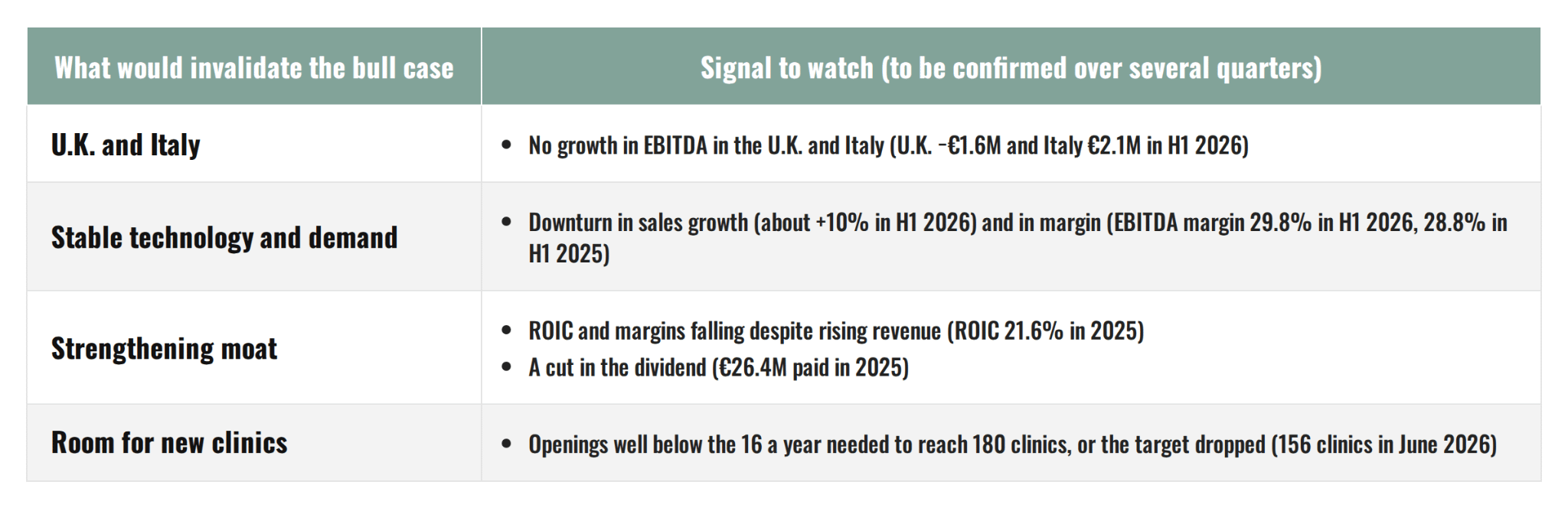
The UK is on the road to recovery, and Italy continues its momentum
UK: In the first half of 2026, revenue rose 28% to 10.7 million euros, and the EBITDA loss narrowed from 3.0 to 1.6 million euros compared with the first half of 2025 (+1.4 million euros in a year), even as the company continued to hire.
Italy: The network grew from 8 clinics at the end of 2024 to 11 in June 2026, with revenue up 9% year-over-year and EBITDA up 25%.
Changes in technology or alternatives are fairly stable
I find it hard to imagine people collectively changing their minds about glasses, whether to wear them or have surgery. In a 2024 survey commissioned by a manufacturer of implantable lenses, 88% of Spaniards said they wanted to live without glasses. Demand shows no signs of waning, and people continue to seek surgery if they can afford it.
As for the possibility of alternatives that would eliminate the need for glasses, such as a treatment that cures nearsightedness or something similar, we can only wait and see for now.
Spain is doing well, and other countries are growing
GDP grew by 0.7% in the second quarter of 2026 (2.7% YoY), driven by domestic demand: household consumption rose by 3.2% over the past year. The unemployment rate fell to 9.87%, below 10%. There will come a time when Spain’s economic performance will slow, and this could affect Baviera. For now, Spain is doing OK.
But until then, other countries continue to grow, driving the push to internationalize sales so that Baviera’s growth rests on multiple pillars. Today, sales in Spain account for 68% of total sales; tomorrow, that figure could be 40%, then 20%, to reach in the long term (or come close to) the revenue share within the EU.
The Moat grows stronger over time
I don’t see any competitive advantage of Baviera over other clinic groups; the main factor is the size and operational efficiency of management. But in terms of competitive advantage over other smaller players, Baviera operates 156 clinics under a single brand across all its countries, has a global advertising budget of 15.1 million euros (which a small practice cannot match), and offers enormous opportunities for profitable reinvestment, with a return on invested capital of 21.6% in 2025.
I’ll finish with the key point of the bull case:
There are still significant opportunities for new clinics
The network has 156 clinics, and the goal reported by the press is 180, about 16 new openings per year. There is still room for growth in countries where the group already operates: Germany has 34 clinics, the United Kingdom has 19, and Italy has 11, compared to 92 in Spain.
Beyond that, there is the rest of the EU to expand into: France, the Nordic countries, the Benelux countries (and Switzerland). Baviera has not announced any plans for these countries, but such expansion remains entirely possible.
Each clinic opening costs approximately 1.4 million euros and is funded by operating cash flow, without borrowing, and generates approximately 0.4 million euros in free cash flow per year. The payback period is therefore approximately 3 years.
When it’s not a new location, it may be an acquisition or a merger. Baviera has already completed three such transactions: Care Vision in Germany in 2008 (8 centers in Germany and 1 in Austria), Clínica Torre Eva in Milan in 2019, and Optimax in the United Kingdom in 2024.
Even in Spain, the two largest firms account for about 40 percent of a market worth approximately 720 million euros, meaning that more than half goes to other firms and independent practices, which remain a driver of growth. Organically though, as mentioned in the last point of the bear case.
Opportunities for external growth remain strong, and the sector could decide to consolidate in order to increase economies of scale and brand strength, including Baviera. The sector remains highly fragmented (outside of Spain), so the prospect of regulatory authorities blocking such moves is still a long way off.
Blind spots
We cannot yet assess the M&A opportunities in the target countries and the consideration of the regulator
Will the CEO be successful? We could end up with a “Steve Ballmer scenario” at Microsoft, where the company’s stock price stayed flat for over a decade.
Will the company seek to expand internationally?
It is quite difficult to assess the performance of the other groups, which are private and therefore don’t disclose information.
5. Price scorecard
The numbers only make sense if you’ve read the section on the two theses.
As Aswath Damodaran puts it, “numbers without stories to back them up are exercises in financial modeling.”
The scorecard below requires an important assumption, namely, the continuity of a normal economic environment, i.e. without recession, major credit event, market crash. I will someday write an article about how to deal with these conditions.
Any of these could push the stock below the bear case shown here, temporarily, independently of the company’s underlying performance.
All figures in the scorecard are pre-tax and pre-fees. Run the numbers for your own situation before drawing conclusions.
The horizon is in three years, in October 2029.
The assumptions are the following:
Baviera will open 6 clinics per year in the bear case, +8% openings per year in the central case, and +10% in the bull case. The last one corresponds to the historical trend of the company.
For the revenue, it goes from 4.3% per year in the bear case, to 8.2% per year in the central case, and 10.1% per year in the bull case. Revenue per clinic is assumed to stay flat.
The margins go from 14.8% in 2026 (net margin) to 12% in the bear case, 15% in the central case, and 17% in the bull case.
Payout ratio of 60% in the central case and 55% in the bull case, with none in the bear case; dividends are reinvested with no tax and no fees.
The selected P/E ratios range from the 2022 low to the June 2026 high, and add the possibility of raising the valuation ratio to 25, taking into account the company’s market capitalization exceeding €1 billion and reducing its liquidity discount.
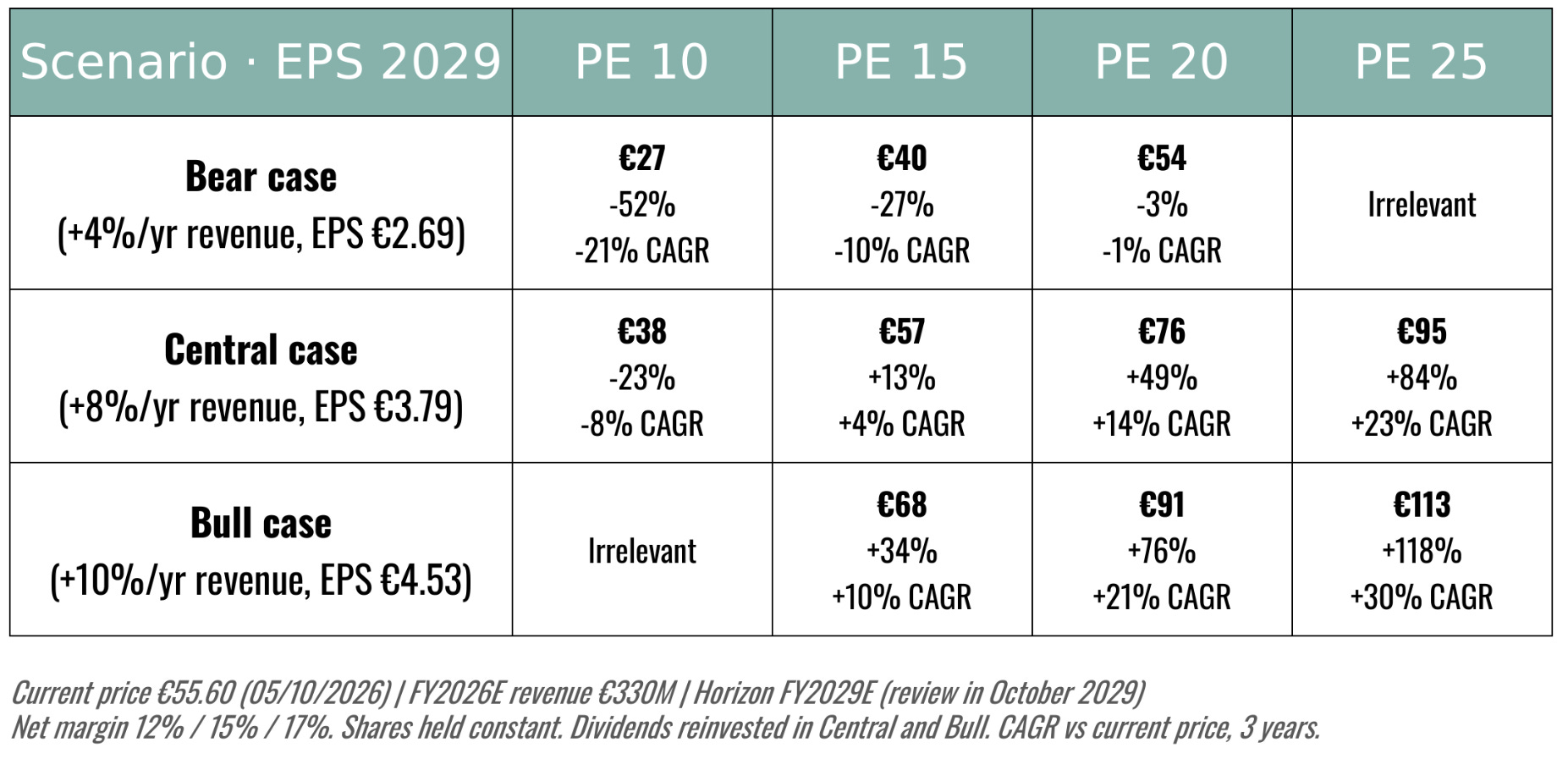
My conviction sits at the €91 scenario or higher (bull case x PE of 20).
The re-rating will mainly depend on the catalysts covered in the next section.
6. Momentum
Crossing fundamentals (covered above) with momentum is an excellent way to improve your returns from doing just fundamentals. You’re never right on your own, especially since a significant part of returns comes from the multiple, particularly if your horizon is under 5 years.
Catalysts
Results for the upcoming quarters: It is necessary to verify whether the overall figures are in line with the forecasts in Part 5, namely, approximately 8–10% revenue growth and a stable margin of around 15–17%.
Any downward trend will need to be examined; in that case, I’ll post a deep-dive update.
Evolution of the low-margin countries: In addition, the United Kingdom and Italy must report margin improvements and increases in revenue.
Announcement of acquisitions: Baviera has made three acquisitions since 2008 (Care Vision in Germany in 2008, Clínica Torre Eva in Milan in 2019, Optimax in the U.K. in 2024), all small, and none is announced today. Its net financial position and profitability leave room for more.
A deal would be the first sign that the last point of the bull case is starting to play out. So far, Baviera has acquired a group to establish a presence in a new country, and may continue to do so.
Increase in the free float by Aier: Aier holds 73% of the capital and the free float is only about 18%. In April 2025, Aier and Vito placed 8% of the capital with a discount of 8.7%, which took the float from about 10% to about 18%. The stock first fell 5.3%, to €33.80, then rose. Aier has sold in steps before, so another placement is possible, but it has said nothing. A new placement would improve liquidity and open the shareholder base to new funds. In the short term, it would put pressure on the price, and would be a good time to add to the stock, all other things being equal.
Review of the strategic plan by the new CEO: For now, Luis Grávalos Soria is following in his predecessor’s footsteps, but he may introduce a new plan whose content and execution could drive the company to a new level of growth.
When to enter the stock?
The main risk for the stock is a decrease in the PE ratio, which could be a good opportunity (depending on the reasons for the selloff) to build a bigger position, because usually, in this situation of top PE, I could start a small position.
From that point on, the price may fall solely because of the multiple, in which case you should increase your position when the decline stops.
For my part, I prefer to wait until the stock price drops before buying more, which also gives me a chance to see and hear what the new CEO has to say.
Final Thoughts
This is a company with good prospects over the next 10 years or more. The growth isn’t spectacular: it’s not Nebius Group. But the model is simple and funds itself. New clinics are paid for with operating cash flow, any excess is available for organic growth, dividends or new acquisitions, and the return on invested capital was 21.6% in 2025.
But it’s the kind of stock you can hold onto for 10 years and potentially end up with 4 to 5 times your initial investment.
As the company had a price of €8 during Covid, it is up 7-fold since. If it keeps up the pace of fundamentals and quadruples in value over 10 years, it will have grown 28-fold. Another ten years or so in the same direction, and it will be a 100-bagger in 26 years, not from this point though.
I see a clear long-term advantage for this company that supports the bullish case over the bearish case. But it will take time. Compounders come out ahead in the long run. This one, with peace of mind as well.
Disclaimer: This content is for educational purposes only and does not constitute investment advice. See our full disclaimer.